Mount Vernon in Ruin, War, and Restoration
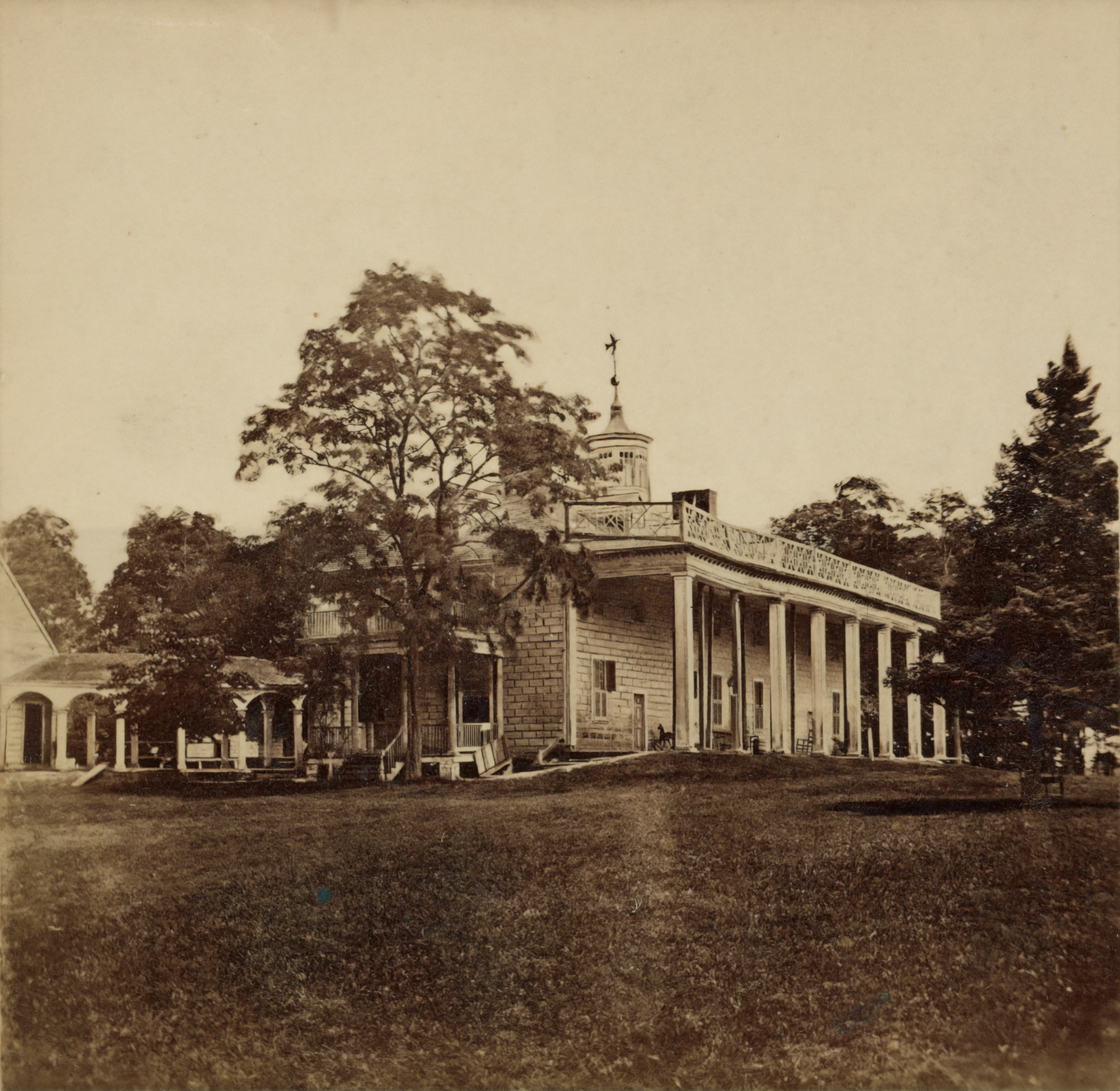
Mount Vernon, Bell & Bros., 1867
There are few places in the United States where the full arc of the nation's story can be traced as clearly as at Mount Vernon. It begins with land and ambition, rises through war and nation-building, descends into neglect, and survives because a group of determined citizens refused to let it disappear.
To understand Mount Vernon is to understand not only George Washington, but the fragile inheritance he left behind.
Long before it became synonymous with Washington, the land along the Potomac River was part of a colonial grant. In 1674, the tract was acquired by the Washington family through John Washington, George's great-grandfather. The property passed through generations until it came under the control of George's half-brother, Lawrence Washington.
Lawrence named the estate "Mount Vernon" after Admiral Edward Vernon, under whom he had served in the British Navy. At that time, it was not yet the grand estate we recognize. It was a working plantation, modest in scale and typical of Virginia's tidewater region.
When Lawrence died in 1752, the property eventually passed to his younger half-brother, George. At just 20 years old, Washington inherited not only land, but responsibility and opportunity.
Over the next four decades, Washington transformed Mount Vernon into something far more ambitious.
He expanded the house in stages, turning a simple farmhouse into a 21-room mansion. The most distinctive feature, the long piazza facing the Potomac, reflected both aesthetic vision and practical design, capturing breezes and offering commanding views of the river.
But Mount Vernon was not merely a residence. It was a complex agricultural enterprise. Washington shifted away from tobacco, which had depleted the soil, and moved toward diversified farming, including wheat, corn, and livestock. He introduced crop rotation and innovative techniques, positioning himself as one of the more forward-thinking planters of his time. At its height, the estate spanned approximately 8,000 acres, divided into multiple farms, each with its own function and labor force.
Any honest history of Mount Vernon must reckon with the labor system that sustained it. Washington enslaved more than 300 people over the course of his life. These men, women, and children lived and worked across the estate, in fields, workshops, kitchens, and the mansion itself. Some were owned directly by Washington, others were part of the Custis estate through his marriage to Martha Washington.
Life for the enslaved community was harsh and tightly controlled. Families were often separated. Labor was constant. Punishment was a reality. Yet within that system, individuals formed communities, preserved traditions, and resisted in both quiet and overt ways. Records show attempts to escape, negotiations over work, and the persistence of family bonds despite systemic disruption. Washington's views evolved over time. By the end of his life, he had come to oppose slavery in principle, though he did not dismantle it during his lifetime. In his will, he made the unusual decision to free the people he directly owned upon Martha Washington's death, the only founding father to do so. It was a significant gesture, though incomplete, as it did not apply to those held through the Custis estate.
Mount Vernon served as Washington's anchor through war and governance. During the American Revolutionary War, he left the estate to command the Continental Army. For eight years, Mount Vernon was largely in the hands of overseers and managers. British naval forces passed along the Potomac, and while the house was spared destruction, the war disrupted the estate's operations. After the war, Washington returned home, but not for long. In 1789, he became the first president of the United States, and once again, Mount Vernon was left in the care of others. It was only after his presidency ended in 1797 that Washington returned permanently. These final years were among the most productive at the estate. He expanded agricultural operations, improved infrastructure, and managed his lands with renewed focus.
He died at Mount Vernon on December 14, 1799.
Washington's death marked the beginning of a long decline. The estate passed through family hands, eventually coming under the control of John Augustine Washington III. By the early nineteenth century, Mount Vernon was already showing signs of wear. The reasons were straightforward. The estate was expensive to maintain. Agricultural profits were inconsistent. Tourism brought visitors, but little revenue. The scale of the property required constant upkeep, and successive owners lacked either the funds or the inclination to invest at the level Washington had. By the 1840s and 1850s, reports described peeling paint, sagging structures, and neglected grounds. The home of the nation's founding figure was slipping into visible disrepair. Efforts were made to sell the property to the federal government, but Congress declined. Sectional tensions over slavery and the growing divide between North and South overshadowed preservation concerns. Mount Vernon, like the country itself, was being pulled apart.
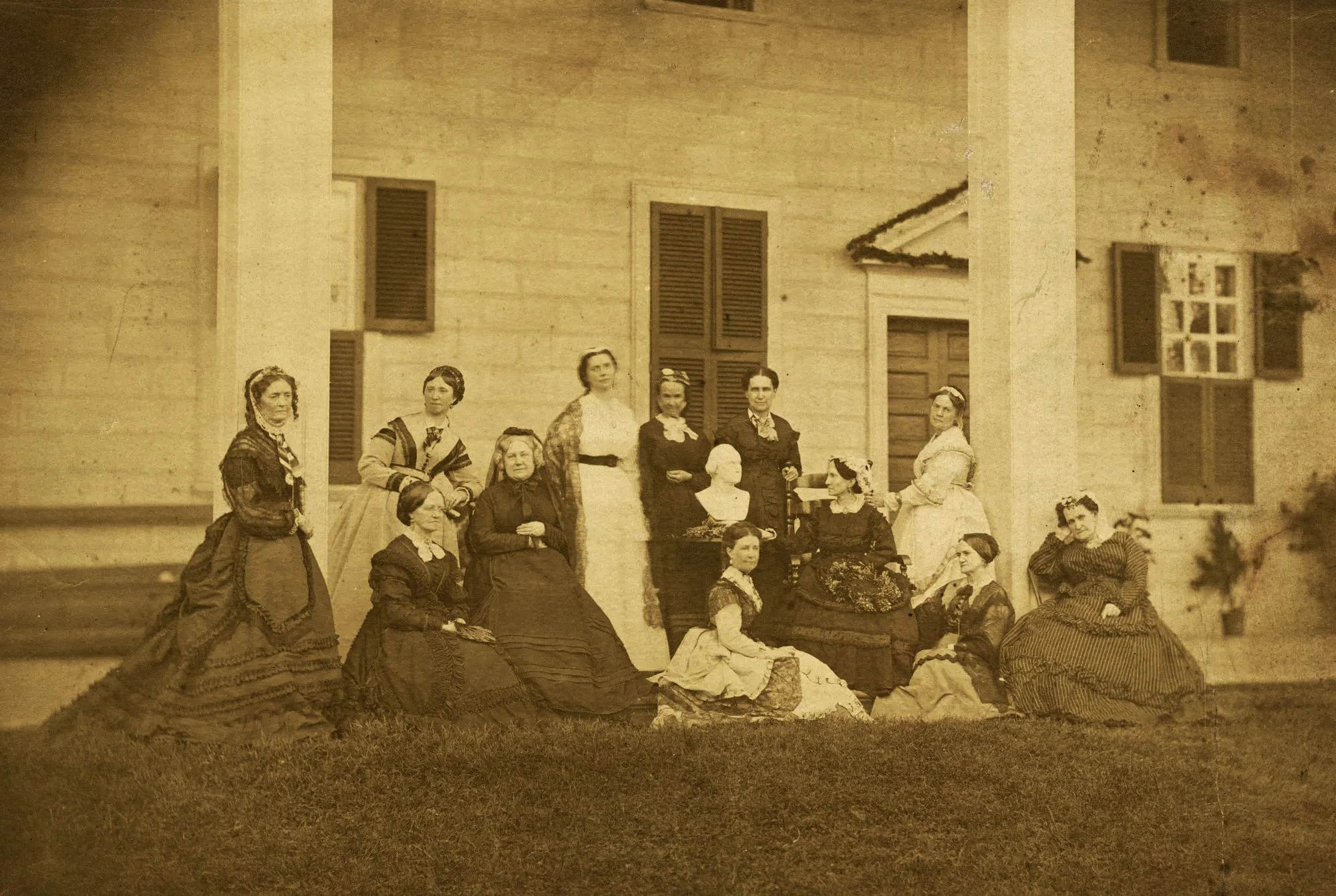
Mount Vernon Ladies' Association, 1870 (photo by Alexander Gardner)
The rescue of Mount Vernon did not come from the government. It came from citizens, led by Ann Pamela Cunningham. In 1853, Cunningham organized a national campaign to purchase and preserve the estate. Her argument was direct: if the nation would not act, its people must. The result was the Mount Vernon Ladies' Association, composed of women from across the country who raised funds, organized support, and negotiated the purchase of the property. In 1858, they secured the estate for $200,000, and in 1860, they took formal possession. It was one of the first large-scale historic preservation efforts in the United States.
When the Civil War began, Mount Vernon stood in a precarious position. Located in Virginia, part of the Confederacy, it sat along the Potomac River, within reach of Union-controlled territory. Yet despite its location, the estate was never formally occupied by either side. Instead, it became something rare, neutral ground. Soldiers from both the Union and the Confederacy visited, often leaving their weapons behind out of respect. The legacy of Washington transcended the conflict, at least within the boundaries of his home. Still, the war slowed restoration efforts. Travel was difficult, funding uncertain, and the estate's condition remained fragile. By the late 1860s, when photographers like the Bell Brothers documented Mount Vernon, it had been saved, but not yet fully restored.
After the war, the Mount Vernon Ladies' Association resumed its work in earnest. Their goal was not modernization, but preservation. They sought to return the estate to its late eighteenth-century appearance, based on records, inventories, and surviving artifacts. Furniture was tracked down across the country. Buildings were repaired or reconstructed. Landscapes were reshaped to reflect Washington's era. Over time, Mount Vernon became one of the most carefully preserved historic sites in the United States. Unlike many landmarks, it has remained under private stewardship, maintained by the Mount Vernon Ladies' Association rather than the federal government.
Today, Mount Vernon stands not as a relic, but as a fully realized historical site. Visitors walk the same piazza overlooking the Potomac. They pass through rooms carefully restored to reflect Washington's lifetime. They encounter exhibitions that address not only Washington's achievements, but the full complexity of the estate, including the lives of the enslaved people who lived there. It is no longer neglected. It is curated, studied, and preserved with precision. Yet the memory of its near loss remains essential to its meaning.
Mount Vernon's story is not one of uninterrupted reverence. It is a story of neglect, rescue, and deliberate remembrance. It was built through ambition, sustained through labor, nearly lost through indifference, and saved through civic will. When the Bell Brothers turned their cameras toward the estate after the Civil War, they captured something fleeting, a house between ruin and restoration, a nation between fracture and recovery. That moment still lingers. Because Mount Vernon was not inevitable. It survived because someone chose to remember.