Henry B. Payne and the Price of a Senate SeatWealth, Standard Oil, and Political Power in Gilded Age America
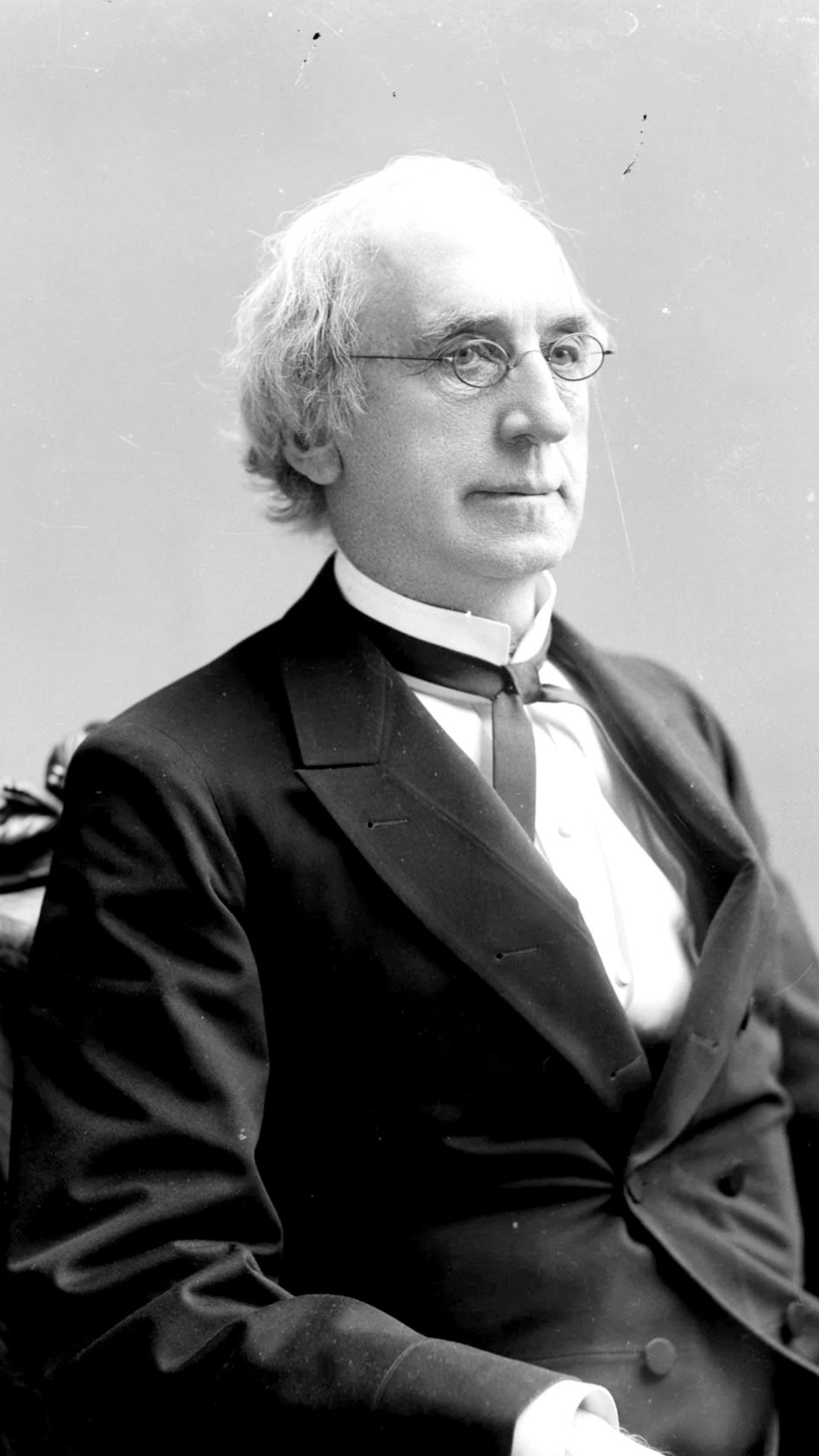
Henry B. Payne, C.M Bell Studio, c.1887
In a surviving portrait from the Washington studio of C. M. Bell, Henry B. Payne looks every inch the nineteenth-century statesman. White-haired, carefully dressed, and composed before the camera, he belonged to a generation of political leaders who carried themselves with the formality expected of public men. Yet behind the dignified portrait lay one of the Gilded Age's more revealing controversies, a dispute that raised an enduring American question: how much political influence can great wealth purchase before republican government itself begins to suffer?
Payne was no political lightweight who appeared suddenly because his family possessed money. By the time he entered the United States Senate in 1885, he had practiced law, helped build a railroad, served in state and national office, helped settle the disputed presidential election of 1876, and been considered for the Democratic presidential nomination. His credentials were substantial. His fortune and family connections were equally substantial. Those two worlds, public service and private wealth, collided spectacularly in the controversy surrounding his election to the Senate.
Henry B. Payne was born November 30, 1810, in Hamilton, New York, the son of Elisha and Esther Douglass Payne. He graduated from Hamilton College in 1832, studied law, and moved west to Cleveland in 1833. Cleveland then had only a few thousand residents and stood at the beginning of the extraordinary commercial expansion that would transform it into one of America's major industrial cities. Payne studied under prominent Cleveland lawyer Sherlock J. Andrews and was admitted to the Ohio bar in 1834. He practiced successfully for roughly twelve years, much of that time in partnership with Hiram V. Willson. Recurring pulmonary hemorrhages eventually forced him to reduce his legal work, an apparent personal setback that redirected his energies toward business and politics. His timing proved fortunate. Cleveland was becoming a transportation and commercial hub connecting the Great Lakes to the rapidly developing interior. Payne became deeply involved in creating the Cleveland and Columbus Railroad and served as its president from 1851 to 1854. Railroads represented more than transportation. They linked finance, land speculation, manufacturing, law, and politics in ways that helped create the economic culture later called the Gilded Age.
Payne therefore entered politics already comfortable in corporate enterprise. His local career included serving as Cleveland's first solicitor under its municipal charter and being elected to the city council in 1847. In 1849 he entered the Ohio Senate. He also helped manage Cleveland's municipal finances, serving for many years on the city's sinking fund commission. Contemporary accounts credited the commission with strengthening Cleveland's financial position and reducing municipal debt. This part of Payne's career matters because the later Senate scandal can otherwise distort the historical picture. He spent decades building a serious reputation before bribery accusations engulfed him.
Payne was a northern Democrat at a time when the Democratic Party was being torn apart by slavery and sectionalism. He became associated with Senator Stephen A. Douglas and the doctrine of popular sovereignty, which held that residents of territories should determine questions surrounding slavery rather than having Congress impose the outcome. During the struggle over Kansas's proslavery Lecompton Constitution, Payne sided with Douglas against the Buchanan administration. At the 1860 Democratic convention, he defended the northern Democratic position of congressional nonintervention in the territories. The fight split the party and helped elect Abraham Lincoln.
Payne had earlier sought high office. He unsuccessfully ran for an Ohio Senate seat in 1851 and for governor of Ohio in 1857, where Republican Salmon P. Chase defeated him. During the Civil War, despite his Democratic affiliation, Payne supported the Union war effort, encouraged enlistments, and helped secure funds to equip Ohio troops. He belonged, in other words, to the world of establishment northern Democrats, skeptical of Republican political dominance but loyal to the Union.
Payne finally reached Washington as an elected national official in 1875, entering the Forty-fourth Congress as a Democratic representative from Ohio. His single House term placed him at the center of one of the most dangerous constitutional disputes in American history. The 1876 presidential election between Republican Rutherford B. Hayes and New York Democrat Samuel J. Tilden produced disputed electoral returns in Florida, Louisiana, South Carolina, and Oregon. Congress created a special Electoral Commission to decide which electoral votes to count. Congress appointed Payne to that fifteen-member body. The commission ultimately awarded the disputed votes to Hayes, who secured the presidency by a single electoral vote. Payne's participation gave him national standing and further cemented his ties to the Democratic establishment.
By 1880, he was sufficiently prominent to be considered for the Democratic presidential nomination. At the national convention in Cincinnati, Payne received 81 votes on the first ballot, placing him behind Winfield Scott Hancock and Thomas F. Bayard but ahead of several better-known Democrats. Hancock eventually captured the nomination. Payne surfaced again in presidential politics in 1884. He was no accidental senator. He had been operating near the top of Democratic politics for years. Then came the election that permanently marked his reputation.
The Ohio Senate Contest
Before the Seventeenth Amendment was ratified in 1913, United States senators were selected by state legislatures rather than directly by voters. That system created fertile ground for political bargaining. A wealthy candidate did not need to persuade hundreds of thousands of voters. He needed to secure enough votes among a comparatively small number of state legislators. In Ohio, the incumbent Democratic senator was George H. Pendleton, an important national political figure whose name had become associated with civil service reform. Democrats controlled the Ohio legislature following the 1883 election cycle and therefore expected to choose the state's next senator. Payne emerged as the successful candidate.
His candidacy also attracted some Republican sympathy because he supported protective tariffs, an economic position congenial to many Republicans and important to industrial Ohio. The Senate Historical Office notes that Republicans who knew they could not elect one of their own sometimes preferred Payne to other Democrats. The selection soon drew accusations that were hard to dismiss. At the center of the suspicion stood Payne's son, Oliver Hazard Payne.
The Standard Oil Connection
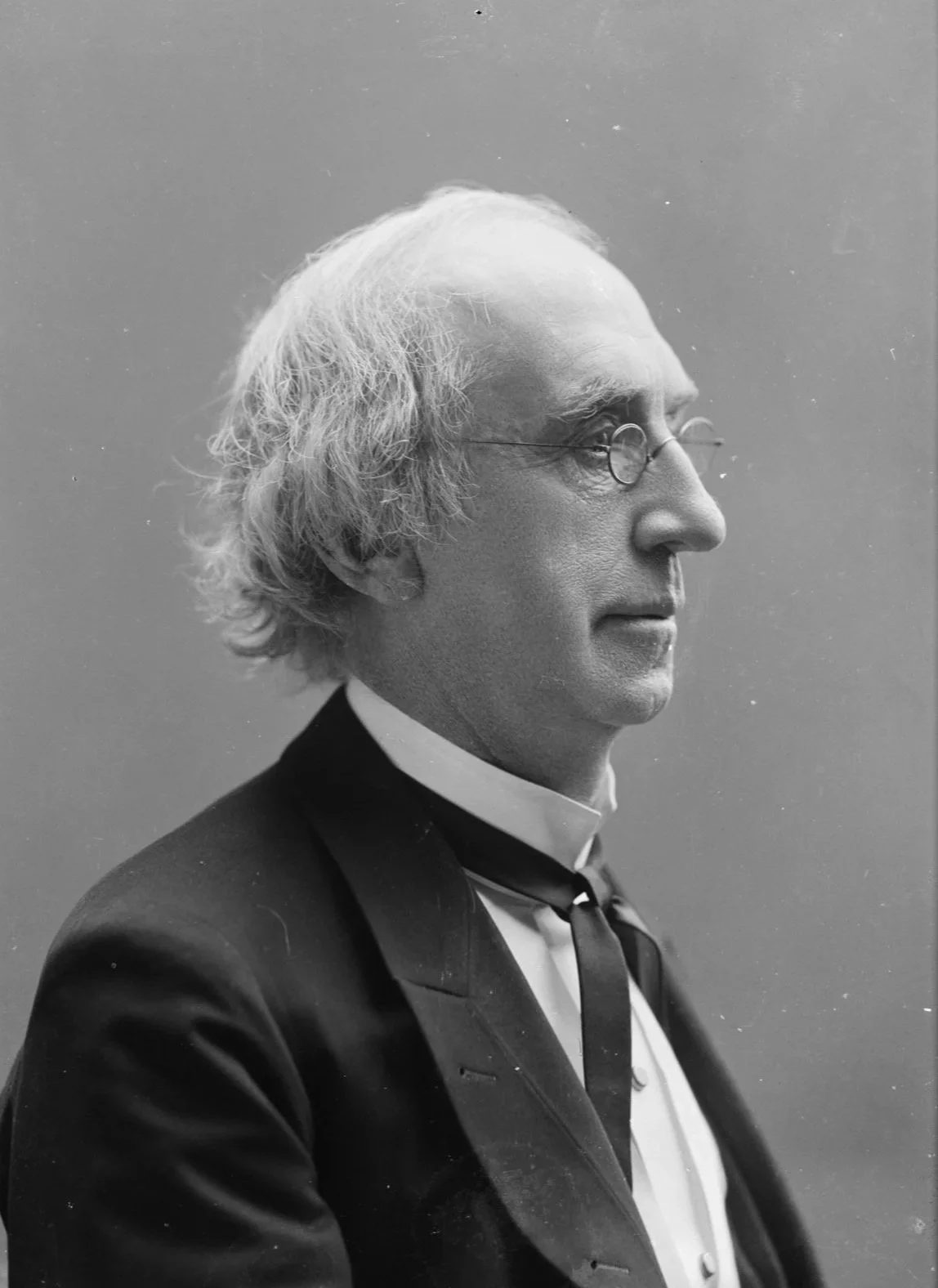
Senator Henry B. Payne, C.M. Bell Studio c. 1887
Oliver Payne had served in the Civil War and returned to Cleveland to enter the oil business. In 1872, his refining company joined John D. Rockefeller's rapidly expanding Standard Oil organization. Oliver became Standard Oil's treasurer and accumulated an enormous fortune. His holdings eventually ranked among the company's largest. This was the era when Standard Oil was becoming a symbol of concentrated corporate power. The appearance of Standard Oil-connected men around Henry Payne's Senate candidacy therefore invited suspicion. Critics alleged that money circulated among Ohio legislators to shift support from Pendleton to Payne.
Years later, Ida Tarbell included the episode in her celebrated investigation of Standard Oil. Tarbell described a sudden shift in support for Payne among legislators and repeated allegations that large sums of money circulated in Columbus. Her account should be read as the work of a reform-era critic of Standard Oil, though it remains important evidence of how the public came to understand the election. One allegation proved especially damaging. According to testimony later discussed by the United States Senate, Oliver Payne reportedly said his father's election had cost him $100,000. For perspective, $100,000 in 1884 represented an extraordinary political expenditure. More damaging than the amount was the implication. A Standard Oil millionaire appeared to describe a United States Senate seat as something with a price tag. The claim was never conclusively proved.
The Ohio legislature elected Payne in January 1884 for the term beginning March 4, 1885. He presented his credentials and entered the Senate without formal challenge. Ohio's political balance subsequently shifted. Republicans regained control of the legislature, and the accusations surrounding Payne's election were revived. An Ohio legislative committee investigated. Fifty-five witnesses were questioned. The Ohio General Assembly ultimately forwarded material to Washington and asked the United States Senate to examine whether Payne's election had been obtained through bribery. One Ohio resolution bluntly asserted that the testimony warranted believing Payne's Senate seat had been purchased through the corrupt use of money. The issue reached a fractured Senate Committee on Privileges and Elections in 1886. Four Democratic members concluded that the material Ohio supplied did not justify further Senate investigation. They emphasized that no evidence personally implicated Henry Payne in bribery or showed that he knew of corrupt payments.
Three Republican members reached a similar practical conclusion. They argued that an election could theoretically be invalidated if enough legislative votes had been purchased to alter the result, regardless of whether Payne personally participated. Yet Ohio's own investigation had produced no indictments or prosecutions after questioning dozens of witnesses. Two Republican members dissented and demanded a full Senate inquiry. Among those pressing the issue was Ohio's Republican senator John Sherman, brother of Civil War general William Tecumseh Sherman and himself one of the most powerful men in national politics. Sherman made a politically potent point. If Payne were innocent, why had Payne himself not demanded the fullest possible investigation? Massachusetts Republican George F. Hoar also argued for further inquiry, warning that abandoning the matter would represent an exceptionally damaging moment for the Senate. On July 23, 1886, the Senate voted 44 to 17 against continuing the investigation. Twenty-nine Democrats and fifteen Republicans formed the majority. Payne retained his seat. Legally and constitutionally, the matter was finished. Historically, it was not.
Was Payne's Seat Bought?
A scholarly judgment requires greater restraint than the political rhetoric of 1886. No established evidence shows that Henry B. Payne personally handed money to legislators, authorized bribes, or knowingly participated in a scheme to buy his seat. The Senate committee specifically found no evidence personally inculpating him. Substantial reasons also existed for suspicion. His candidacy rose rapidly. His son possessed immense Standard Oil wealth. Allegations of large political expenditures circulated at the time, not decades later. The Ohio legislature formally asked the Senate to investigate corruption. Political figures from both parties regarded the accusations seriously enough to debate them publicly.
The Senate's decision did not find that no corruption occurred. It largely concluded that the evidence presented did not justify the Senate opening or pursuing a further investigation capable of removing Payne. That may be a narrower conclusion, but the distinction remains important. Saying that Payne "bought his Senate seat" goes beyond the historical evidence. Saying his election was surrounded by credible, unresolved allegations of corrupt expenditures is well supported.
The Gilded Age Senate
Payne's case was larger than Payne, as the nineteenth-century method of electing senators increasingly appeared vulnerable to money, corporate influence, and political machines. Legislative deadlocks were common. Accusations of bribery appeared in several states. Wealthy businessmen and railroad, mining, banking, and industrial interests acquired extraordinary influence over political parties. The Senate Historical Office itself places Payne within a chamber increasingly populated by businessmen and political allies of corporate interests.
Cases like Payne's helped erode public trust in legislative senatorial elections. They became part of a broader reform movement that eventually produced the Seventeenth Amendment, establishing direct popular election of senators in 1913. Payne alone did not cause that reform. His controversy illustrates why the old system became increasingly difficult to defend.
The Last Years
Payne served his full Senate term from 1885 through 1891. He did not seek reelection. Calvin S. Brice succeeded him, another wealthy Ohio Democrat whose relationship with money and politics would itself attract scrutiny. Payne returned to Cleveland and died there on September 9, 1896, at 85. They buried him in Lake View Cemetery. His political lineage continued. His granddaughter Frances Payne Bolton served nearly three decades in the United States House of Representatives, and his great-grandson Oliver Payne Bolton also served in Congress. ([History, Art & Archives][10])
Yet the episode that most clearly illuminates Henry Payne's age remains his Senate election.
Past Is Prologue
Seen through C. M. Bell's camera, Payne appears distant from modern America. The beard, clothing, photographic process, and political rituals belong unmistakably to another century. The underlying questions are familiar. Can immense private wealth coexist with democratic government without distorting it? When a wealthy individual finances political activity, where does legitimate influence end and purchased access begin? How should institutions investigate their own members? Does the absence of provable criminal conduct necessarily settle the broader question of political integrity?
He was an accomplished lawyer, businessman, civic leader, congressman, presidential contender, and senator. He also benefited from a Senate election shadowed by money, corporate power, partisan calculation, and allegations serious enough to reach the floor of the United States Senate. The evidence does not let historians pronounce him guilty of buying office. It lets us see the Gilded Age political system in full view: legislators selecting senators, industrial fortunes entering politics, parties protecting their interests, newspapers pressing allegations, committees debating standards of proof, and elected officials deciding how closely they wished to examine one of their own.
More than a century later, the names have changed. Standard Oil is history. Senators are elected directly. Campaign finance operates under an entirely different legal structure. The fundamental tension between wealth and political power remains part of American democracy. That is what makes the old man in C. M. Bell's photograph worth another look. As Shakespeare put it, "What's past is prologue."
Principal sources
This account draws particularly on the U.S. Senate Historical Office's study of the Payne contested election, the official 1886 Senate Committee on Privileges and Elections report, the Biographical Directory and House Historian's congressional biography of Payne, the Encyclopedia of Cleveland History, contemporary congressional materials, and Ida M. Tarbell's History of the Standard Oil Company. The House Historian also identifies Albert H. Walker's contemporary 1886 pamphlet, The Payne Bribery Case and the United States Senate, as a principal specialized source on the controversy. ([U.S. Senate][5])
C. M. Bell portrait of U.S. Senator Henry B. Payne of Ohio, whose contested election became one of the Gilded Age's revealing confrontations over corporate wealth and political power. Photo reproduction by Colley W. Bell III.
[1]: https://history.house.gov/People/Listing/P/PAYNE%2C-Henry-B--%28P000151%29/ "PAYNE, Henry B. | US House of Representatives: History, Art & Archives"
[2]: https://case.edu/ech/articles/p/payne-henry-b "PAYNE, HENRY B. | Encyclopedia of Cleveland History | Case Western Reserve University"
[3]: https://en.wikisource.org/wiki/Abraham_Lincoln%3A_A_History/ "Abraham Lincoln: A History/Volume 2 - Wikisource, the free online library"
[4]: https://wiki.knf7.com/content/wikipedia_en_all_maxi_2025-08/1880_Democratic_National_Convention?utm_source=chatgpt.com "1880 Democratic National Convention"
[5]: https://www.senate.gov/about/origins-foundations/electing-appointing-senators/contested-senate-elections/075Henry_Payne.htm "U.S. Senate: The Election Case of Henry B. Payne of Ohio (1886)"
[6]: https://case.edu/ech/articles/p/payne-oliver-hazard?utm_source=chatgpt.com "PAYNE, OLIVER HAZARD | Encyclopedia of Cleveland History | Case Western Reserve University"
[7]: https://en.wikisource.org/wiki/The_History_of_the_Standard_Oil_Company/Volume_2/Chapter_13?utm_source=chatgpt.com "The History of the Standard Oil Company/Volume 2/Chapter 13 - Wikisource, the free online library"
[8]: https://www.govinfo.gov/content/pkg/SERIALSET-02365_00_00-038-1490-0000/pdf/SERIALSET-02365_00_00-038-1490-0000.pdf?utm_source=chatgpt.com "49th Congress,"
[9]: https://www.senate.gov/states/OH/senators.shtml?utm_source=chatgpt.com "States in the Senate - States in the Senate | Ohio Senators"
[10]: https://history.house.gov/People/Detail/9566?current_search_qs=%3Ffilter%3D9%26PreviousSearch%3DSearch%252cLastName%252c%252c%252c%252c%252cFalse%252cFalse%252cTrue%252c84-85-86-87-88-89-90-91-92-93-94%252cMostRecommended%26CurrentPage%3D2%26SortOrder%3DMostRecommended%26ResultType%3DList%26Command%3D2&utm_source=chatgpt.com "BOLTON, Frances Payne | US House of Representatives: History, Art & Archives"