
Henry Yates Satterlee and the Making of the Washington National Cathedral
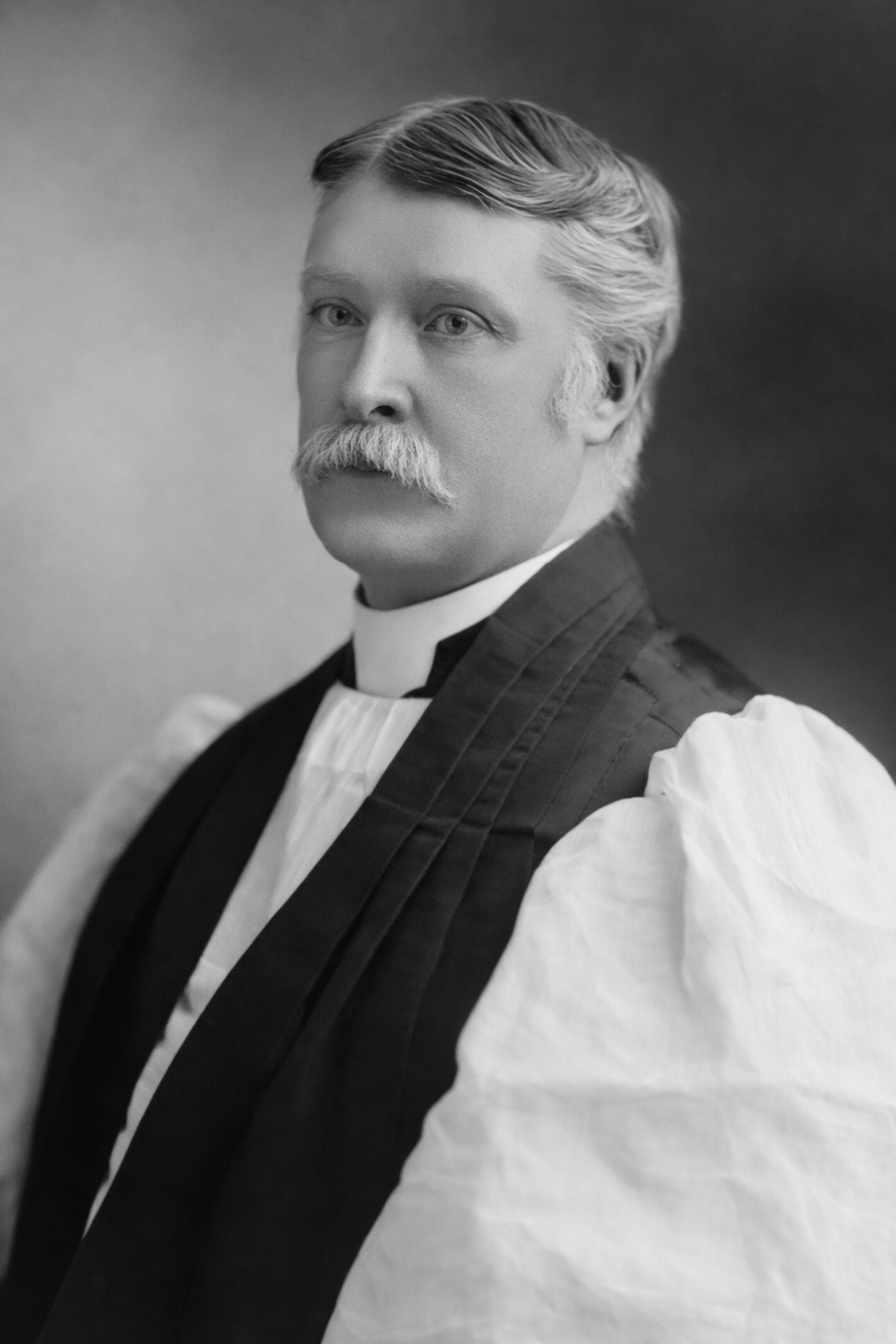
Bishop Henry Yates Satterlee
In the closing decades of the nineteenth century, Washington was still a city in search of its symbols. The Capitol stood firmly on its hill. The Washington Monument pierced the skyline. Yet the nation’s capital lacked something older civilizations had long understood, a sacred place that stood above politics, a place where the spiritual aspirations of a people could be gathered and expressed.
That vision found its steward in Henry Yates Satterlee, the first Episcopal Bishop of Washington. His portrait, captured by the celebrated photographer C.M. Bell, shows a man of quiet conviction, composed, deliberate, and deeply aware of the work before him. Behind that calm exterior was the driving force that would ultimately bring the Washington National Cathedral into existence.
A Vision Older Than the Cathedral
The idea of a national church in the American capital did not originate with Satterlee. More than a century earlier, George Washington had spoken of the need for a great church in the nation’s capital, one that would serve the spiritual life of the republic without belonging to any faction or political movement. Washington imagined a place that would represent the moral and spiritual aspirations of the country, something that would stand above the daily contests of power.
For generations, that vision remained unrealized. Washington grew into a thriving political city, yet the idea of a national cathedral lingered more as aspiration than action.
When Satterlee became bishop in 1896, he understood that the moment had come to give the idea physical form.
Choosing the Heights
Satterlee believed that the cathedral must occupy ground worthy of the nation it served. In 1898 he selected the commanding ridge known as Mount Saint Alban, overlooking the city from the northwest.
From this elevated ground, the cathedral would not dominate the capital in a political sense, but it would be visible, deliberate, and unmistakable. Satterlee wanted the structure to stand as a reminder that national life required something beyond government and commerce. It required reflection, moral formation, and spiritual depth.
The choice of Mount Saint Alban proved decisive. The ridge would eventually become one of the most recognizable religious landscapes in the United States.
Building a Cathedral in the Gothic Tradition
Satterlee also insisted on a particular architectural language. Rather than adopting a modern American style, he championed the great tradition of fourteenth-century English Gothic architecture.
This decision shaped every aspect of the project. Gothic cathedrals were not merely buildings. They were expressions of continuity with centuries of Christian craftsmanship and imagination. Towers, flying buttresses, stone tracery, and stained glass would all work together to create a structure that lifted the eye upward.
In Satterlee’s mind, this was exactly what the American capital required. The nation’s cathedral should not imitate the fleeting styles of its own era. It should belong to a much longer story.
The Foundation Stone
After years of planning, organization, and fundraising, the moment of beginning finally arrived.
On September 29, 1907, Satterlee stood on the cathedral grounds with Theodore Roosevelt for the laying of the foundation stone. The ceremony marked the official birth of the cathedral project.
Roosevelt represented the nation's political life. Satterlee represented the spiritual vision behind the undertaking. Together they signaled that the cathedral would stand as a national institution, not confined to the Episcopal Church alone, but serving the broader public life of the country.
A Vision Cut Short
Henry Yates Satterlee did not live to see the cathedral rise.
He died in 1908, only a year after the foundation stone was laid. At the time of his death, the vast Gothic structure existed mostly on paper and in stone plans carefully drawn by architects.
Yet the project moved forward because the vision had already taken root.
Satterlee was buried within the cathedral grounds in Bethlehem Chapel, the first completed portion of the cathedral complex. His alabaster tomb remains there today, quietly situated within the space that marked the earliest finished section of the building he set in motion.
The Cathedral That Followed
Construction of the Washington National Cathedral continued for much of the twentieth century. The building rose slowly, stone by stone, in keeping with the traditional methods Satterlee had championed.
Decades passed before the cathedral reached completion in 1990. By then, it had become one of the most recognizable landmarks in Washington, a place for national mourning, thanksgiving, and reflection.
Presidents would be memorialized there. National prayers would be offered within its walls. Visitors from around the world would climb its towers and walk beneath its vaulted ceilings.
All of this traces back to the quiet determination of the bishop whose portrait sits before us.
Through the Lens of C.M. Bell
The C.M. Bell Studio, one of Washington’s most important nineteenth-century photographic studios, captured Satterlee during the years when his vision was taking shape.
Bell’s photography often preserved the faces of the nation’s builders, soldiers, politicians, and thinkers. In the portrait of Satterlee, the studio recorded the man responsible for one of the capital’s most enduring monuments.
The photograph does more than document a bishop. It captures the moment when an American idea was about to take architectural form.
Today the Washington National Cathedral stands as one of the most remarkable religious structures in the United States. Its towers rise above Mount Saint Alban much as Satterlee imagined more than a century ago.
And in the quiet portrait preserved by C.M. Bell, we see the man who believed that the nation’s capital deserved a cathedral worthy of its ideals.