Faith, Politics, and Washington Portraits
Ellen Parkinson
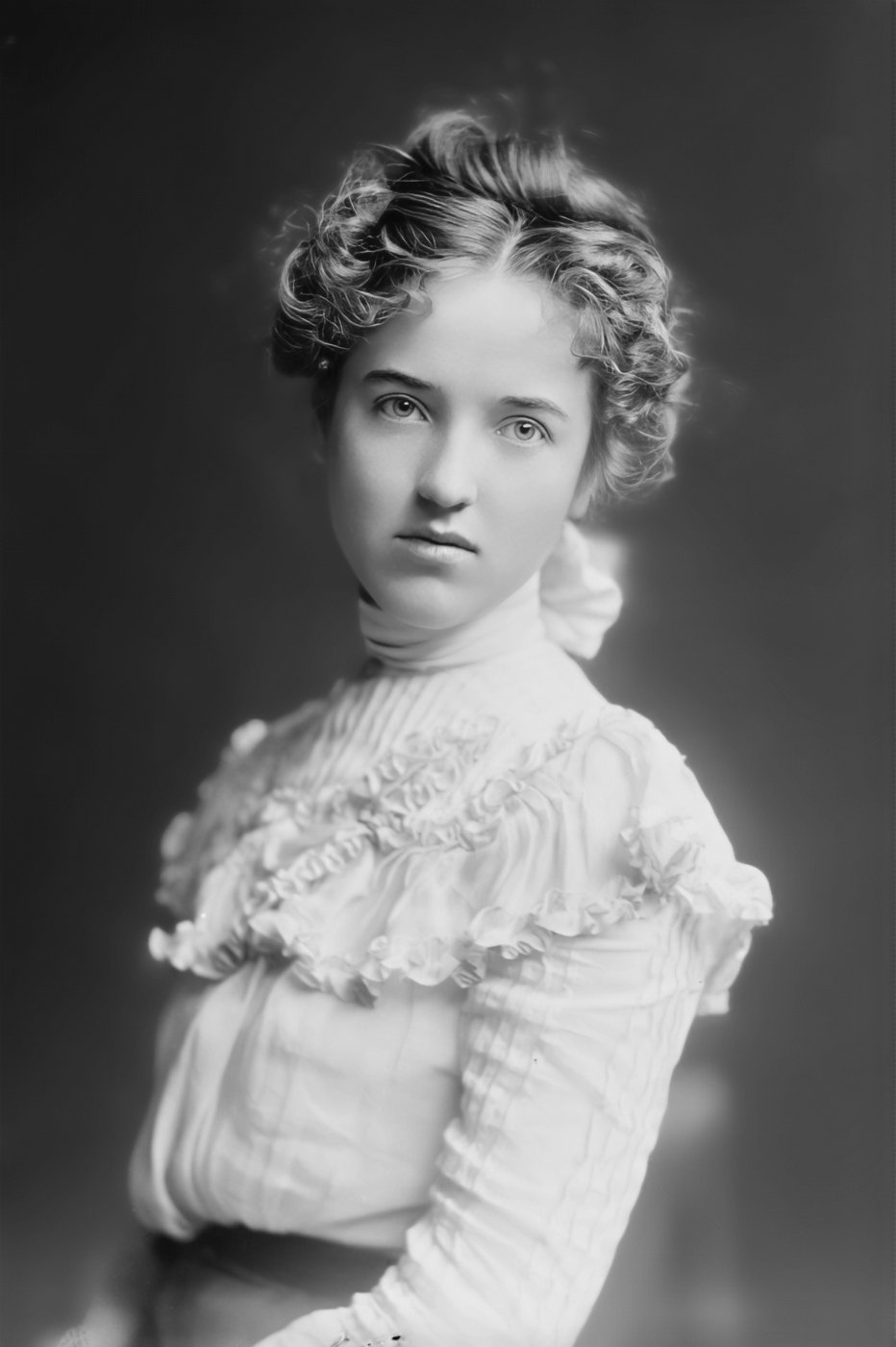
Sometime in the opening years of the twentieth century, a young woman named Nellie Parkinson sat before the camera at the C. M. Bell Studio in Washington, D.C. She wore a white blouse of the high-necked Edwardian fashion, its front arranged in an elaborate succession of pleats and ruffles. Her hair had been drawn upward in curls, though enough had been left loose to soften the face. She looked directly into the camera with an expression at once youthful and composed. Across the top of the glass negative, in the hurried hand of the studio, someone had written the number 48378 and the name "Nellie Parkinson."
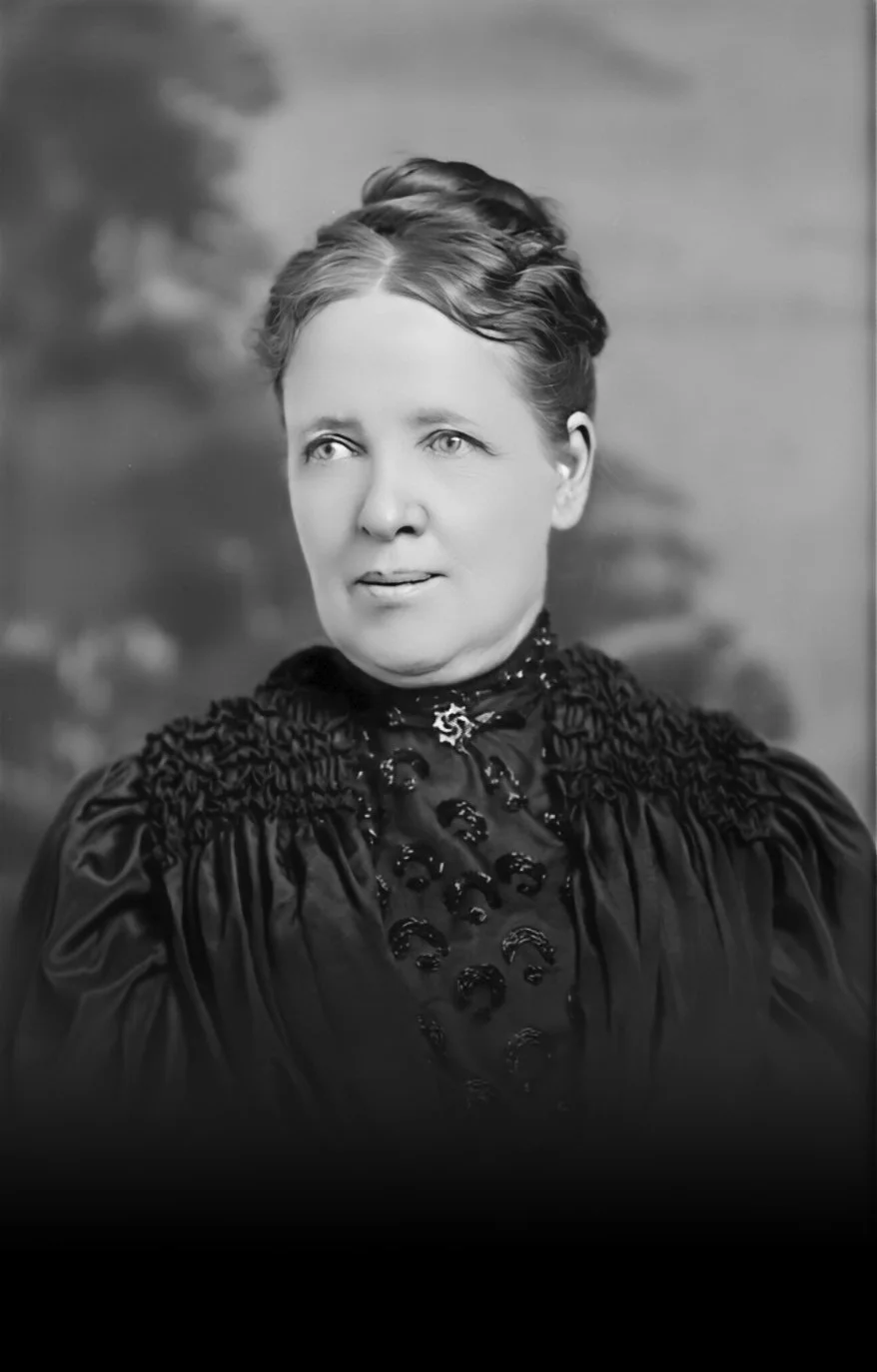
Another Bell negative bears the name "Mrs. Parkinson." It shows an older woman dressed in black, her hair carefully arranged and her manner dignified. The resemblance between the two women, the names attached to the plates, and the period in which the photographs were taken strongly suggest that they were mother and daughter: Ellen Elvira "Nellie" Nash Parkinson and her daughter, Nellie Elvira Parkinson. The identification is not yet absolute. A studio ledger, travel record, or Washington newspaper notice may eventually settle the matter. The evidence already assembled is compelling enough to place the portraits within a remarkable story involving religion, women's political organization, the United States Senate, and one of the most controversial public investigations of the age.
Charles Milton Bell himself had been dead for more than a decade. He died in 1893, after establishing one of the most important photographic studios in the nation's capital. By the time the Parkinson women appeared before the camera, the business was being overseen by his widow, Annie Colley Bell. There is something fitting in this. Annie Bell, managing the studio after her husband's death, preserved the likenesses of two women whose lives had also been shaped by the obligations of family, church, and public responsibility. The photographs were made in an era when women still lacked the national vote, yet women were already organizing, issuing resolutions, influencing elections, defending religious communities, and taking part in national political debates.
The elder woman was Ellen Elvira Nash Parkinson, generally known as Nellie. Born in the early 1860s, she crossed the plains as a small child with the family that raised her and grew to adulthood among the Latter-day Saint settlements of Utah and southeastern Idaho. In December 1878, while still in her teens, she married William Chandler Parkinson in Salt Lake City. Their life together unfolded in the Mormon communities of Franklin and Preston, Idaho, and later at Hyrum, Utah. William Parkinson became a prominent churchman, missionary, businessman, and local leader. His brother, George Chandler Parkinson, also rose to prominence in the Church and in the affairs of the intermountain West.
The Parkinson family belonged to a generation that had grown up with the memory of migration, persecution, settlement, and the long struggle over Utah's place within the Union. Their religious faith was not a private matter confined to Sunday worship. It shaped community life, marriage, commerce, education, charitable work, and politics. For women such as Ellen Parkinson, the Relief Society offered one of the principal avenues of public responsibility. Founded in the nineteenth century, the Relief Society had developed into an extensive organization of women operating at general, stake, and ward levels throughout the Church of Jesus Christ of Latter-day Saints.
Its work was practical and immediate. Relief Society women cared for the sick, aided families in poverty, assisted widows and orphans, prepared the dead for burial, gathered clothing and food, and responded to local emergencies. They also taught religious principles and maintained a broad network of communication among women scattered across towns and settlements. Mrs. Parkinson became president of the Hyrum Stake Relief Society. It was a position of considerable local importance. According to a report published in the Washington Times on March 7, 1904, she spoke on behalf of some six hundred women. Her organization had officers, committees, conferences, and formal procedures. It could adopt resolutions and send them across the country for publication in the newspapers of Washington.
The struggle over Senator Reed Smoot of Utah.
Reed Smoot had been elected to the United States Senate in 1903. He was a successful businessman, a Republican, and a member of the Quorum of the Twelve Apostles of the Church of Jesus Christ of Latter-day Saints. His election immediately set off a national campaign to prevent him from taking his seat. Smoot himself was not a polygamist. His opponents argued that the central issue was his position as an apostle. They maintained that a man who owed religious obedience to the Church's leadership could not exercise independent judgment as a United States senator. They also charged that plural marriage continued within Mormon society despite the Church's formal renunciation of the practice in 1890.
Petitions poured into Washington. Protestant organizations, reform associations, ministers, and women's groups demanded that the Senate investigate Smoot and remove him. The controversy became much larger than the career of one senator. It reopened the entire national argument over Mormonism, plural marriage, religious authority, and the political power of the Church in Utah. The Senate hearings lasted for years. Witness after witness was called. Church leaders were questioned closely about doctrine, marriage, political influence, and ecclesiastical discipline. Senators sought to determine whether Mormon officeholders could act independently and whether Church organizations were being used for political purposes.
The Relief Society itself entered the discussion. In the official testimony, senators questioned Church president Joseph F. Smith about the nature and authority of the organization. Smith described a network of women engaged in charity, religious teaching, and the care of the poor, sick, elderly, and orphaned. The questions revealed the assumptions of the time. Senators wanted to know whether the women exercised authority of their own or carried out instructions handed down by male church leaders. Similar suspicions followed every public statement made by Latter-day Saint women during the Smoot controversy. Mrs. Parkinson and the women of the Hyrum Stake Relief Society understood that they were being spoken about throughout the country. Eastern reformers frequently portrayed Mormon women as helpless victims, held in submission by husbands, priests, and church authorities. The women in Utah saw themselves differently. They regarded many of their critics as people who knew little of their homes, their work, or their religious convictions. Among the prominent Washington women approached by Smoot's opponents was Belva Ann Lockwood.
Lockwood was already a celebrated figure. Born in New York in 1830, she had worked as a teacher before coming to Washington after the Civil War. She studied law at a time when the legal profession was almost entirely closed to women. When officials delayed granting her diploma, she appealed to President Ulysses S. Grant, who served as ex officio chancellor of the institution. She later campaigned for federal legislation allowing qualified women to practice before the United States Supreme Court. In 1879, she became the first woman admitted to the Court's bar, and soon afterward the first woman to argue a case before the justices. Lockwood ran for president of the United States in 1884 and again in 1888, decades before women won the national right to vote. She was also active in peace organizations, suffrage work, and reform movements. By 1904, no one could plausibly accuse her of indifference to women's rights. When she was asked to sign a petition seeking Smoot's removal, Lockwood refused. Her refusal impressed the women of Utah. They believed she had resisted public pressure and had judged them according to her own experience. General Relief Society leaders sent her a letter expressing gratitude. The Hyrum Stake Relief Society followed with a resolution of its own.
The language was heartfelt and direct. The women declared that their lives and characters had been misrepresented by people who did not understand them. They thanked Lockwood for speaking from knowledge rather than prejudice. They praised what they called her courage and fairness. At the end of the resolution, the name of the president, Mrs. Nellie Parkinson, appeared. It was followed by the names of her vice presidents and committee members. The statement was issued on behalf of approximately six hundred members. This was not a private letter of thanks. It was a public declaration prepared by an organized body of women and sent into the political world of Washington. Its appearance in a Washington newspaper was itself an achievement. The women of Hyrum were making clear that they did not require eastern reformers to describe their lives for them. Mrs. Parkinson's actions also reflected the political and religious world of her own family. Her husband and his brother occupied positions of influence within the Church. A George Parkinson of Idaho appears in testimony connected with political campaigning in Utah. He was accused of speaking against candidates who had fallen into conflict with Church leaders.
The man may have been George Chandler Parkinson, Mrs. Parkinson's brother-in-law. The identification cannot be considered final because the transcript does not provide a middle name. The reference is significant because it shows how closely the Senate investigators examined the Parkinson world and the networks in which the family moved. The Smoot hearings became a national examination of the entire Latter-day Saint system. Family connections, business relations, church offices, missionary assignments, and political activity were all subjected to scrutiny. Mrs. Parkinson's resolution belonged to that atmosphere. It was a defense of Smoot, a defense of the Relief Society, and a defense of the right of Mormon women to describe their own lives.
Nellie Parkinson, age 19
Mother and Daughter
The younger Nellie Parkinson would have been in her late teens when the Bell portrait was made. Born in Preston, Idaho, in September 1885, she came of age as her mother's generation confronted the Smoot investigation. Her portrait gives no hint of political controversy. She appears in the formal dress of a young woman entering adulthood. Her expression is grave, almost searching. The photograph captures the reserve expected in an important studio sitting, yet it also conveys something individual and immediate.
In September 1910, Nellie Elvira Parkinson married Alfred LeRoy Kelly in the Logan Utah Temple. She would live through two world wars, the Great Depression, the arrival of radio and television, and the transformation of the West from isolated settlements into modern cities and suburbs. Her husband died in 1953. Nellie spent the closing years of her life in Salt Lake City and died there in January 1968, at the age of eighty-two. The young woman photographed in Washington at the opening of the century had lived into the era of Lyndon Johnson and the Apollo space program.
Her mother also lived to old age, dying in 1949. Behind the formal portrait of Mrs. Parkinson lay a long and complicated domestic life, including the realities of plural marriage. William Chandler Parkinson took another wife during his marriage to Ellen. Her surviving recollections address that experience and the difficulties it brought. The composed woman in black had known migration, settlement, marriage, motherhood, religious responsibility, and public controversy. She had stood at the head of a women's organization numbering in the hundreds. When her community came under attack, she placed her name at the bottom of a declaration intended for the nation's capital.
Reed Smoot survived the attempt to remove him. In 1907, the full Senate declined to expel him, and he remained in office for three decades. He became chairman of the powerful Senate Finance Committee and one of the most influential Republican senators of his time. His name later became inseparable from the tariff legislation of 1930, commonly known as the Smoot-Hawley Tariff. The law raised import duties on thousands of goods at a moment when the world economy was already in crisis. Other nations retaliated, international trade contracted, and the measure became a lasting symbol of the economic nationalism of the early Depression years. The tariff did not by itself cause the Great Depression. It deepened the decline in international commerce and added to the economic disorder spreading across the world. Smoot lost his seat in the Democratic landslide of 1932 and returned to Utah.
By then, the controversy of 1904 belonged to another age. The religious movement once regarded by many Americans as alien and dangerous had moved steadily toward acceptance within national life. Smoot, once threatened with exclusion because he was a Mormon apostle, had become one of the longest-serving and most powerful senators in Washington. The Bell portraits preserve that earlier moment. They show a mother who helped lead six hundred women into a national debate and a daughter whose life stretched far into the twentieth century. They also preserve the work of Annie Colley Bell, who maintained the Washington studio after the death of Charles Milton Bell and ensured that the Bell name continued to record the faces of the capital.
History often survives in this fashion, not in the great event alone, but in a name written across a glass plate, a newspaper notice set in narrow columns, a resolution passed by women hundreds of miles from Washington, and two faces held motionless before a camera. Mrs. Parkinson looks slightly away from us, calm and assured. Her daughter meets the camera directly. Between them lies the story of a family, a faith, and a country still deciding who might speak, who might lead, and who belonged within American public life.