
Uncle Joe and the Architecture of Power
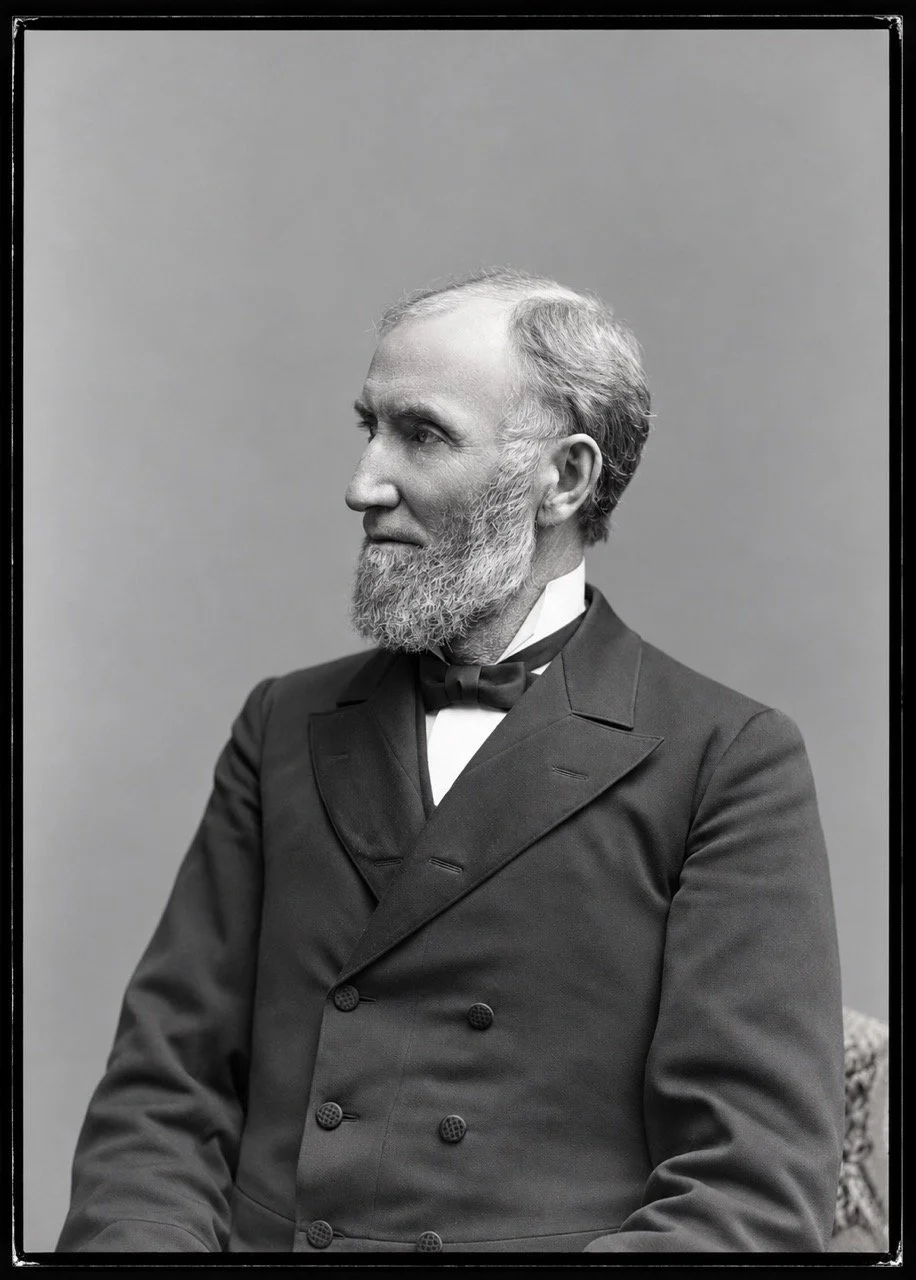
Joe Cannon in the C.M. Bell Studio
There he sits. The beard is full and gray. The coat is buttoned high across his chest. His collar is stiff, his bow tie carefully arranged. In one photograph he looks directly into the camera. In another he turns in profile, his long nose and sharply defined face giving him the appearance of a man accustomed to listening before speaking. There is no cigar. There is no gavel. No trace yet of the political cartoonist's favorite old autocrat, no exaggerated eyebrows, no Speaker's chair, no caption announcing him as "Czar Cannon."
Joseph Gurney Cannon sat before the camera at the C. M. Bell Studio in Washington in the 1880s or early 90s. The surviving glass negatives are remarkable partly because of what they leave out. They capture Cannon before the mythology completely overtook the man. In time, almost everyone in Washington would know him as "Uncle Joe." His opponents would call him "Czar Cannon." He became Speaker of the House, presided over one of the greatest concentrations of power ever held by a Speaker, survived a revolt against his authority, served forty-six years in Congress, and eventually had one of the great congressional office buildings on Capitol Hill named for him. But here, in Bell's studio, he is still a man seated before a camera. And that is where his story ought to begin.
From North Carolina to Illinois
Joseph Gurney Cannon was born May 7, 1836, in Guilford County, North Carolina, into a Quaker family. It was an early life of farms, mills, churches, and small crossroads settlements, with Greensboro’s modest courthouse town. Quaker influence was strong, creating an unusual antislavery presence within a county where slavery remained legal and economically important. The county was beginning to change, with early textile manufacturing, expanding education, and better road connections pointing toward the more commercial Greensboro that would emerge later in the century.
His parents, Horace Franklin Cannon and Gulielma Hollingsworth Cannon, moved the family west to Indiana while Joseph was still young. It was part of the great westward movement of nineteenth-century America, families leaving older settlements for places where land was available and opportunity seemed larger. Then came tragedy when Joe was 15. Joe's father, a physician, drowned in 1851 while attempting to cross a swollen stream on his way to see a patient. The death changed everything. Whatever comfortable assumptions might have existed about youth ended quickly. Joe had to think about work, education, and how to support himself. He clerked in a country store and eventually studied law, attending Cincinnati Law School before being admitted to the bar in 1858.
He settled in Illinois, first in Shelbyville, where he tried to establish a law practice. Within a year or two he moved northeast to the young railroad town of Tuscola, a decision that would place him in the community where his political career truly began. It is worth remembering what Illinois meant in those years. This was Lincoln's Illinois. Stephen Douglas's Illinois. Law and politics were almost inseparable, and ambitious young attorneys rode circuits, argued cases, attended political meetings, and learned that public life depended as much on knowing people as on knowing statutes, and Joe Cannon proved well suited to it.
When the Civil War began, Cannon did not enlist in the army. He fought his war in a courthouse. In 1861 he became state's attorney for Illinois's twenty-seventh judicial district. He remained in that position until 1868. Joe was a member of the Civil War generation, but he was not a Civil War soldier. His service to the Union was civilian. His district contained substantial Southern sympathy, and later congressional accounts credited him with vigorously enforcing federal and state authority during the war years. One can make too much of that, but one should not make too little of it either. For Joe Cannon, government was never an abstraction. He came of age professionally while the continued existence of the United States was being decided by war. He would carry that generation's instinct for order into Congress. At thirty-six, he was elected to the House of Representatives in 1872 and took his seat on March 4, 1873.
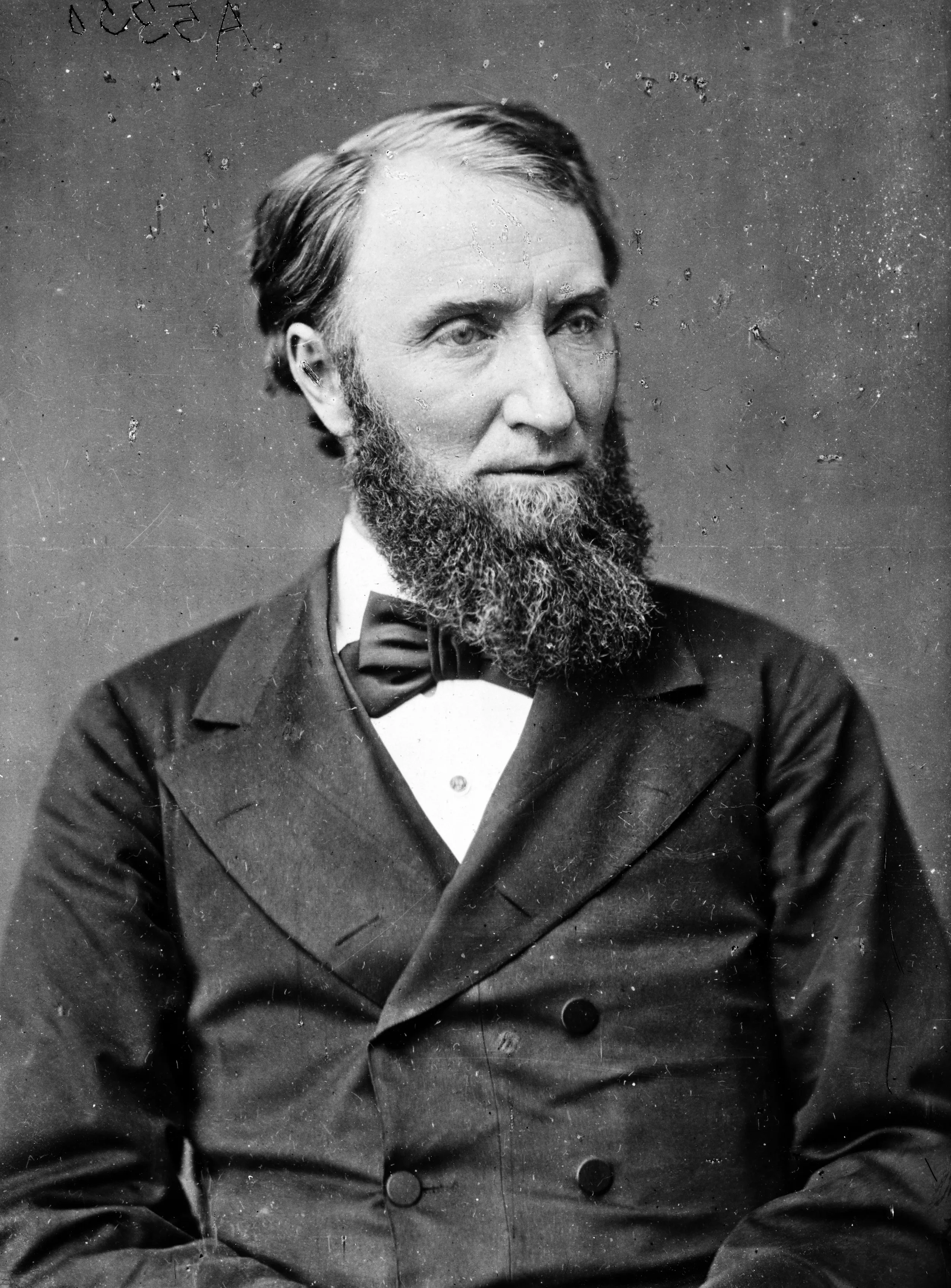
Credit: Library of Congress, Creator: Harris & Ewing
These were the years of the Grant administration as Ulysses S. Grant served as president. The Civil War had ended less than eight years earlier. Reconstruction remained unfinished. Veterans of Shiloh, Antietam, Gettysburg, and the Wilderness sat in Congress. Railroads were transforming the country. Western settlement continued at astonishing speed as the Midwest served as a demographic springboard for the massive westward migration.
Washington itself bore little resemblance to the capital Joe Cannon would know at the end of his career.
Between 1873 and 1910, Washington changed from a muddy, uneven postwar capital into a bustling modern city, and nowhere was that transformation more visible than along Pennsylvania Avenue where C.M. Bell’s studios were located. In the early 1870s, horses, wagons, carriages, and pedestrians crowded an avenue only recently rescued from its notorious ruts, dust, and mud, while gaslights illuminated rows of shops, hotels, newspaper offices, saloons, and aging brick buildings. New pavement soon softened the clatter of hooves, larger Victorian commercial buildings replaced many of the older three- and four-story structures, and by the 1890s streetcars ran down the center of the avenue beneath the looming Capitol dome. By 1900, electric streetcars shared the avenue with bicycles, delivery wagons, elegant carriages, and the occasional automobile, giving Pennsylvania Avenue the appearance of a city caught between two ages, the nineteenth century of horses and gaslight fading before the twentieth century of electricity, mechanized transportation, monumental government, and a rapidly expanding national capital.
As D.C. grew and changed, Joe Cannon’s forty-six years saw him remain in the House, with two interruptions, for most of the next half century. Few congressional careers have stretched across such enormous change. When Cannon arrived, the country was still trying to settle the meaning of the War and Reconstruction. When he left Congress in 1923, Americans were driving automobiles, listening to radio, watching motion pictures, flying airplanes, and living in a nation transformed by industrial power and world war.
But Joe Cannon endured because he understood Congress. Not Congress as it appeared in civics textbooks, but Congress as it actually worked. He learned the committees, appropriations, and the layered procedures across an expanding government. Most importantly, he learned that power in a legislative body rarely belongs to the man who gives the best speech. It belongs to the person who understands how a bill gets to the floor, who appoints the committee, who controls the calendar, who recognizes a member to speak, and who knows when to allow a vote. Joe Cannon learned all of it.
The Education of a Speaker
Appropriations became his particular province, and students of American history often find those biographies the most profound in shaping statescraft. Federal money passes through appropriations bills, and in Washington the person who understands the money generally understands more than the money. Cannon served for years on the House Appropriations Committee and eventually chaired it. The work gave him a view across the entire government. Departments, projects, patronage, military expenditures, public buildings, rivers and harbors, pensions, salaries, all eventually led back to Congress and frequently to appropriations.
Cannon developed a reputation for economy. He could be suspicious of new federal expenditures, sometimes fiercely so. He did not share the enthusiasm of the emerging progressive movement for an ever larger federal government. Yet describing Cannon simply as an obstructionist misses the point. He believed that government ought to work and that the majority ought to govern, and govern well. That conviction would define his Speakership. When Cannon finally became Speaker in November 1903, he was sixty-seven years old. He had been in and around the House for thirty years.
This was no young reformer arriving with theories about congressional leadership. He knew the institution down to its hinges. And the Speakership he inherited was already powerful. For that, another formidable Speaker deserves credit. Thomas Brackett Reed, or “Boss Reed,” as history knows him. Reed was intelligent, enormous, sarcastic, and famously quick with a sentence. He served as Speaker during the 1890s and confronted one of the most absurd parliamentary practices ever tolerated by the House. Members could be physically present in the chamber while refusing to answer a roll call. By remaining silent, they could prevent the House from establishing a quorum and therefore stop business. It was called the disappearing quorum. Reed ended it.
In 1890, he ordered members who were visibly present to be counted whether they answered the roll call or not. The chamber erupted as Democrats protested; members shouted and pounded their desks, but Reed stood his ground. His ruling ultimately prevailed, and what became known as Reed's Rules helped establish a central principle of modern congressional government: a determined minority could protest, argue, delay, and vote, but it could not pretend that members standing visibly in the House chamber did not exist.
Reed strengthened the Speakership like no other speaker in that period of congressional history, and Joe Cannon inherited what Reed had built. There is also a telling difference between the two men. Reed had worn a uniform. During the Civil War, he served as an acting assistant paymaster in the United States Navy. Cannon had not. His Civil War experience had come through law enforcement and civilian government in Illinois. Yet both were products of the same era. Both had witnessed a Union nearly destroyed by division. Both believed effective government required order.
Reed built much of the machinery. Cannon learned to drive it.
"Czar Cannon"
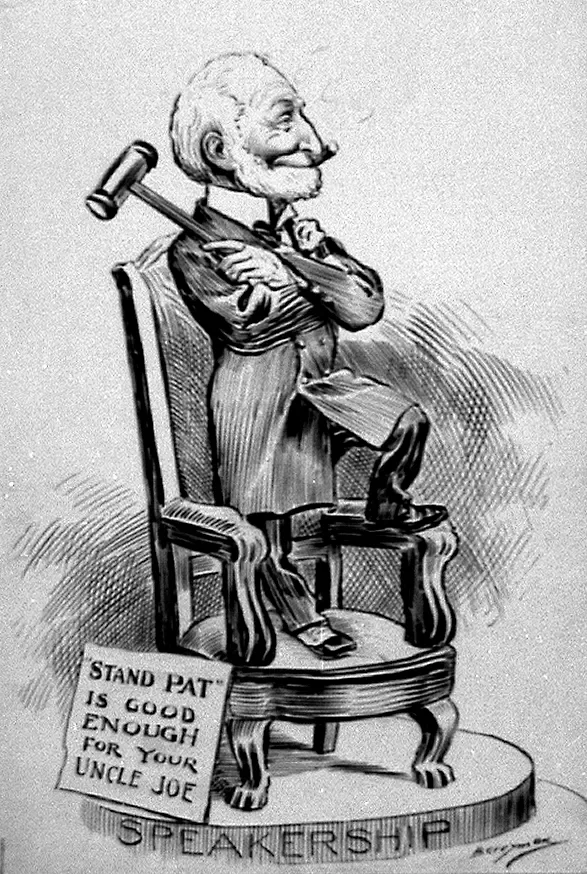
A political cartoon shows “Uncle Joe” Cannon standing on a chair marked “Speakership,” created sometime between 1900 and 1906. Chicago Tribune
Cannon became Speaker at a moment when the office possessed powers difficult to imagine today. The Speaker appointed the standing committees, controlled recognition on the House floor and chaired the Rules Committee. That combination mattered because the Speaker's power was unparalleled. A member could introduce a bill, but a bill mattered little if the appropriate committee buried it. A committee might report legislation, but legislation mattered little if it could not reach the floor. A member might wish to speak, but the chair had to recognize them.
At each point stood Joe Cannon. He used the authority. Committee assignments offered perhaps the clearest example. The Speaker could reward allies with desirable posts and place opponents where their influence was limited. Years later, records discovered in an old trunk in the Cannon House Office Building revealed how closely Cannon followed committee requests and vacancies. Members wrote seeking assignments. Political leaders intervened. Even Theodore Roosevelt communicated with Cannon about committee membership.
The Speaker's office was not ceremonial; Cannon had turned it into a kind of political command post. Critics began calling the system "Cannonism." The media dubbed him "Czar Cannon." The media used the description as condemnation. Political cartoonists had a lot of fun with it. There was Cannon enthroned, Cannon with the gavel, Cannon towering over frightened congressmen. Cannon himself had little patience for the complaint. He believed elections had consequences. If voters elected a Republican majority, Republicans had an obligation to organize the House and pass a Republican program. To Cannon, leadership without power was largely theater. He was not interested in theater, and in today's politics he would think it another nation.
The problem with political nicknames emerging from the Zeitgeist is that they eventually replace history. "Czar Cannon" makes Cannon sound like a man who spent eight years preventing everything from happening. The record is more complicated. Cannon opposed much of the progressive movement developing within his own Republican Party, but progressive legislation could and did pass while he controlled the House.
Joe Cannon’s relationship with Theodore Roosevelt was politically tense but workable. Joe Cannon represented the conservative, “stand-pat” wing of the Republican Party and frequently tried to slow Roosevelt’s progressive domestic agenda. Cannon reportedly described his role with Roosevelt as having to “both pull the load and apply the brakes.” Yet they were not simply enemies. Roosevelt regularly dealt with Cannon as one of Washington's most powerful men, even writing to him directly about committee appointments and legislative priorities. Important Roosevelt-era measures, including railroad regulation, meat inspection, and the Pure Food and Drug Act, passed while Cannon controlled the House.
William Howard Taft and Joe Cannon were much more naturally aligned. Taft entered office in 1909 needing the conservative Republican congressional leadership, and Cannon was central to that establishment. Taft even attempted to use Vice President James Sherman as a liaison with Cannon and other congressional leaders. Cannon helped manage the House during passage of Taft’s major tariff legislation, the Payne-Aldrich Tariff, but the political consequences were severe. Progressive Republicans increasingly saw both the tariff and Cannon’s control of the House as symbols of an entrenched conservative leadership.
This is where the Republican Party began to change, and the 1912 schism first appeared along tariff fault lines. Progressive Republicans, many from the Midwest and West, regarded the old leadership system as unresponsive. They objected to tariff policy, corporate influence, committee control, and the concentration of authority in Cannon's hands. By 1909, the fight was no longer avoidable, and by 1910 the rebellion was under way.
The Night the House Rebelled
The confrontation began with Republican Congressman George Norris of Nebraska. Norris was no Democrat seeking partisan advantage. He was a Republican challenging a Republican Speaker. That made the threat far more dangerous. In March 1910, Norris introduced a resolution designed to restructure the Rules Committee and remove the Speaker from it. Cannon ruled him out of order. The House overruled Cannon.
What followed became one of the great parliamentary struggles in congressional history. For hours the House remained in turmoil. Alliances formed across party lines. Democrats joined insurgent Republicans. Eventually, more than forty Republicans broke with Cannon. The coalition succeeded. The Speaker was removed from the Rules Committee. His institutional power had been broken. And then Cannon did something revealing. He did not resign. Instead, he challenged his opponents to remove him from the Speaker's chair if they wanted to. They could not.
They had sufficient votes to reduce his authority, but they did not have a coalition capable of replacing him. So Cannon remained Speaker. There is something almost magnificent in the stubbornness of it. He had lost the battle over the powers of his office and stayed in the chair anyway. Republicans lost control of the House in the elections later that year. Cannon's Speakership ended in 1911. "Cannonism" had been defeated. Joe Cannon had not.
The Building That Carries His Name
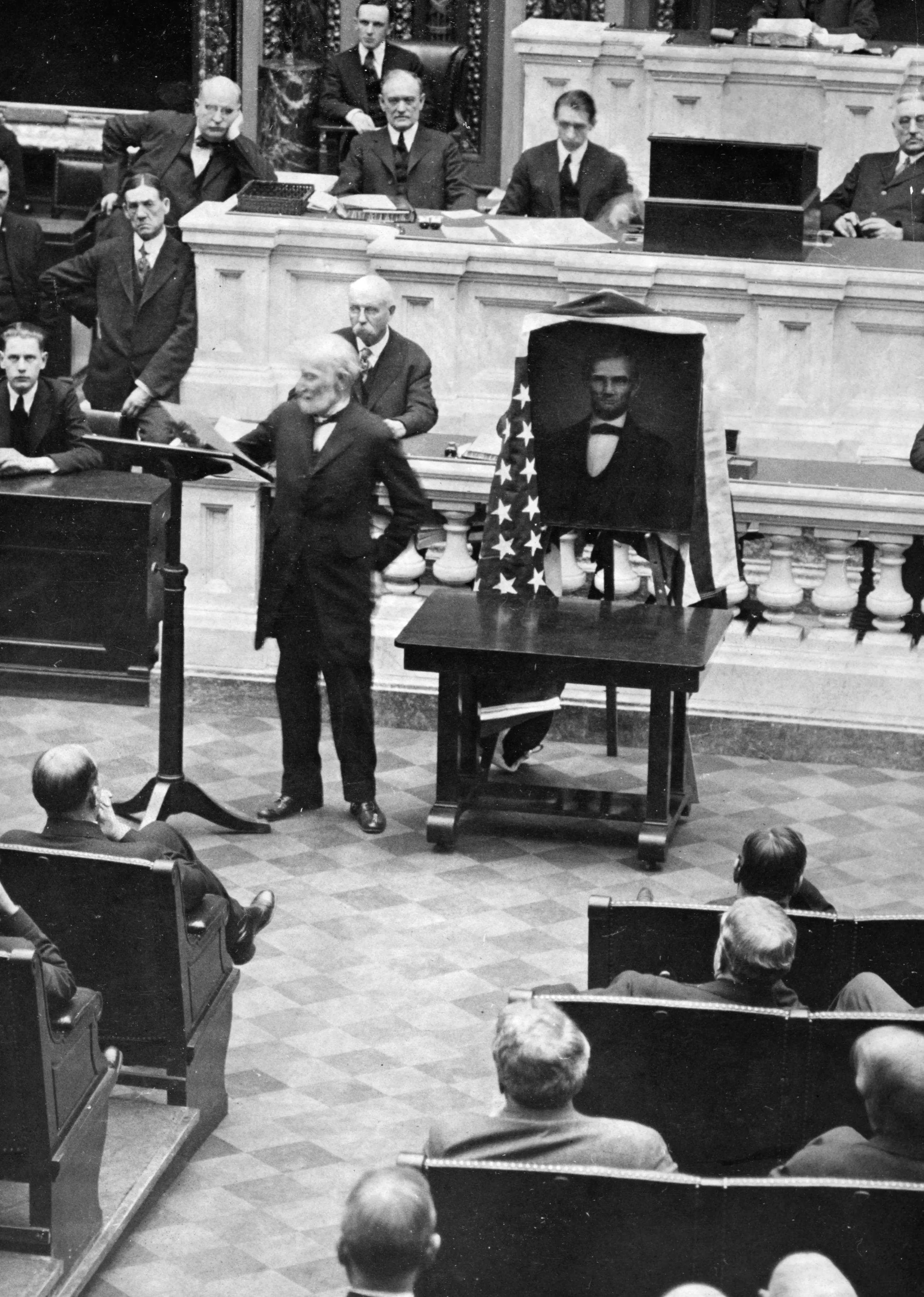
“Uncle Joe” Cannon reads the Gettysburg Address next to a portrait of Abraham Lincoln on the floor of the U.S. House of Representatives on Lincoln’s birthday, Feb. 12, 1920.
Walk around Capitol Hill today and Cannon remains there. The Cannon House Office Building stands just south of the Capitol. It opened in 1908, while Cannon was Speaker. The building tells another part of the story of how Congress was changing.
Before the first House office building opened, members had astonishingly little working space. Some operated from desks in the House chamber. Others borrowed committee rooms or rented offices elsewhere in Washington. Congress was becoming too large and its work too complicated for such arrangements. The new building gave representatives individual offices, telephones, meeting space, and room for staff.
Cannon served on the commission overseeing the project. Ironically, he preferred his rooms in the Capitol and never occupied one of the offices created for ordinary members. Only in 1962 was the building officially named the Cannon House Office Building. President John F. Kennedy signed the legislation giving the House office buildings the names by which we know them today: Cannon, Longworth, and Rayburn.
That produced a fitting historical arrangement. Thomas Brackett Reed had created much of the procedural architecture of the powerful Speakership. Cannon perfected it. Sam Rayburn, another of the great Speakers, would later exercise power differently, relying far more upon relationships, persuasion, seniority, and personal trust. Their names now occupy the same Capitol Hill landscape.
Cannon and Rayburn
If Reed is the best comparison for understanding where Cannon's power came from, Sam Rayburn may be the most useful comparison for understanding how the Speakership evolved afterward. Rayburn served as Speaker for more than seventeen years, longer than anyone in American history. He too was extraordinarily powerful. But Rayburn's power was less dependent upon the formal rules Cannon had possessed.
Cannon could appoint committees. Rayburn had to work through a more dispersed institutional system. Cannon commanded. Rayburn persuaded. That statement should not be pushed too far. Cannon persuaded plenty of people, and Rayburn knew how to apply pressure. Still, the distinction matters.
Cannon represents the high point of the nineteenth-century strong Speaker. Rayburn represents something closer to the modern congressional leader, a man whose effectiveness depended upon knowing members individually, understanding what they needed, building loyalty, and knowing precisely how far he could push. Cannon's revolt in 1910 helped create the House in which Rayburn later operated. Power had not disappeared. It had changed address.
The Cannon Family
Behind the public career was a family. Cannon married Mary Pamela Reed in January 1862. They had daughters, Helen and Mabel. Mary Cannon died suddenly in December 1889, and Cannon never remarried. Helen became an important presence in her father's life and often accompanied him. Mabel married Ernest Xavier LeSeure of Danville. The family expanded into another generation and another century. Mabel's daughter Virginia Cannon LeSeure married Captain William Houghteling in 1918, creating a family connection to the World War I generation. Their son was given a name that ensured the old Speaker would not be forgotten: Joseph Cannon Houghteling.
Born in 1924, Houghteling came of age during the Second World War. Unlike his great-grandfather, he did serve in uniform. He entered the Navy's V-12 officer-training program and later served aboard the USS Ocklawaha during 1945 and 1946, including service connected with the American occupation of Japan. The contrast across four generations is striking. Joe Cannon had defended Union authority as a civilian prosecutor during the Civil War. His great-grandson served as a naval officer at the end of World War II. Houghteling later became a California newspaper publisher, conservationist, and civic leader. His political associations eventually crossed the partisan inheritance of the Cannon family. He became active in Democratic politics and worked with Republican Congressman Pete McCloskey during the Vietnam era.
Families move through history in ways political labels rarely predict. Public records show that Cannon's descendants continued through the Houghteling and Michael families and into the twenty-first century. There are living descendants today. They are private citizens, and there is little reason to turn genealogy into intrusion. It is enough to know that the family continued.
The Old Man Goes Home
Cannon stayed in Congress long after the Speakership was gone. He had lost elections before and returned. He had outlasted enemies, allies, presidents, political movements, and entire generations of congressmen. Finally, in 1922, he announced that he would not seek another term. He was eighty-five. His family had wanted him home. On March 3, 1923, Joseph Cannon completed his final day in Congress. By coincidence, or perhaps one of those accidents history enjoys, that same year brought Cannon into the new age of mass media. The first issue of Time magazine appeared in March 1923. On the cover was Joe Cannon.
Think of the span contained in that image. Cannon had entered Congress in 1873, during the presidency of Ulysses S. Grant. Fifty years later he was appearing on the cover of a magazine created for the modern media age. He had moved from the world of Matthew Brady, glass plates, and engraved newspapers into the age of news magazines and motion pictures.
And motion pictures preserved him. In surviving film, the old Cannon moves. He turns his head. He shifts his body. For a few seconds the nineteenth century moves before us. That moving image is particularly powerful beside the Bell photographs. Bell gives us stillness. Film gives us motion. History supplies the years between them.
Death in Danville
Joseph Gurney Cannon died at his home in Danville, Illinois, on November 12, 1926. He was ninety years old. His daughters were with him. Contemporary reports attributed his death to myocarditis. His body lay in state at the family home, and funeral services were held at St. James Methodist Episcopal Church. Public officials came to pay their respects, among them Vice President Charles G. Dawes. Cannon was buried at Spring Hill Cemetery beside Mary, the wife he had lost thirty-seven years before. The old Speaker had gone home to Illinois. Washington continued without him. But not entirely. His name remained.
It is tempting to reduce Cannon's career to a lesson about excessive power. That is too simple. Representative government has always contained a fundamental problem. A legislature must permit debate, independence, disagreement, and minority rights. It must also eventually decide something. Five hundred people cannot govern by everyone speaking whenever he pleases, introducing whatever he wishes, and preventing votes whenever the outcome appears unfavorable. Someone must organize the business. Someone must establish rules. Someone must lead. The question is how much power that person should have.
Joseph Cannon pushed one answer about as far as the House would tolerate. The revolt of 1910 supplied the answer from the other direction. The Speaker could lead the majority. The Speaker could not permanently substitute himself for it. That is Cannon's institutional significance. His career was not merely the story of one powerful politician. It was a test of how power itself should function in a representative body. And in that sense, Cannon remains surprisingly modern.
Every Speaker since has confronted some version of the same question. How much authority should leadership possess? How much independence should individual members retain? When does discipline become domination? When does independence become paralysis? There is no permanent answer. Congress has been arguing about it since Cannon sat in the chair.
Bell Fixed His Face in Glass
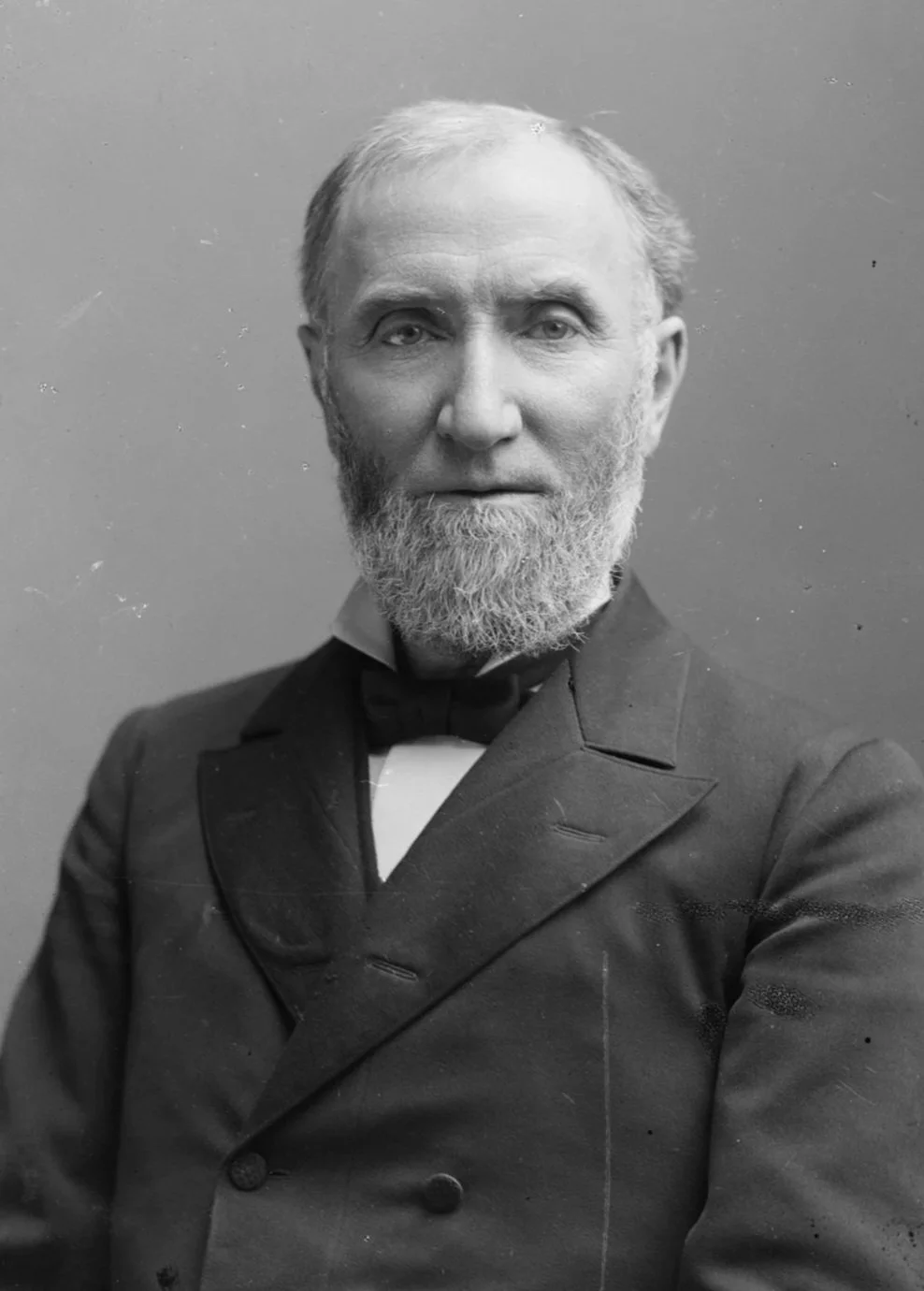
Joe Cannon, photo by C.M. Bell
Which brings us back to the photographs. Cannon sits quietly before the C. M. Bell camera. In one exposure he faces us. In another he turns left. In another right. The beard is meticulously recorded. So are the folds of the coat, the high collar, the thinning hair, the lined forehead. The negatives themselves bear the scars of time. There are scratches. Edges are broken. Emulsion has disappeared in places. Yet Cannon remains. There is something almost startling about that.
C. M. Bell could not have known everything that lay ahead for the man sitting before him. He could not know that Cannon would become Speaker. He could not know that newspapers would call him "Czar." He could not know that Cannon would survive a congressional revolt, live to ninety, appear on the first cover of Time, or have a monumental congressional building named for him.
Bell was doing what photographers do. He was making a portrait. But photography has a peculiar relationship with time. The photographer records a present that instantly becomes a past. And occasionally the person before the camera goes on to become history. Joseph Gurney Cannon became history. Film later preserved his movement. Washington preserved his name. The United States House preserved the record of his power and of the revolt that limited it. But the C. M. Bell Studio preserved something the congressional record cannot.
The man himself.
Before the gavel. Before the caricature. Before the legend.
Joe Cannon walked into a Washington photographic studio, sat before C. M. Bell's camera, and for a fraction of a second remained perfectly still. Bell opened the shutter. Light crossed the room. The image settled onto glass.
More than a century later, Cannon still sits there, and so does the American Republic.