
George B. Cortelyou, Private Secretary to President McKinley
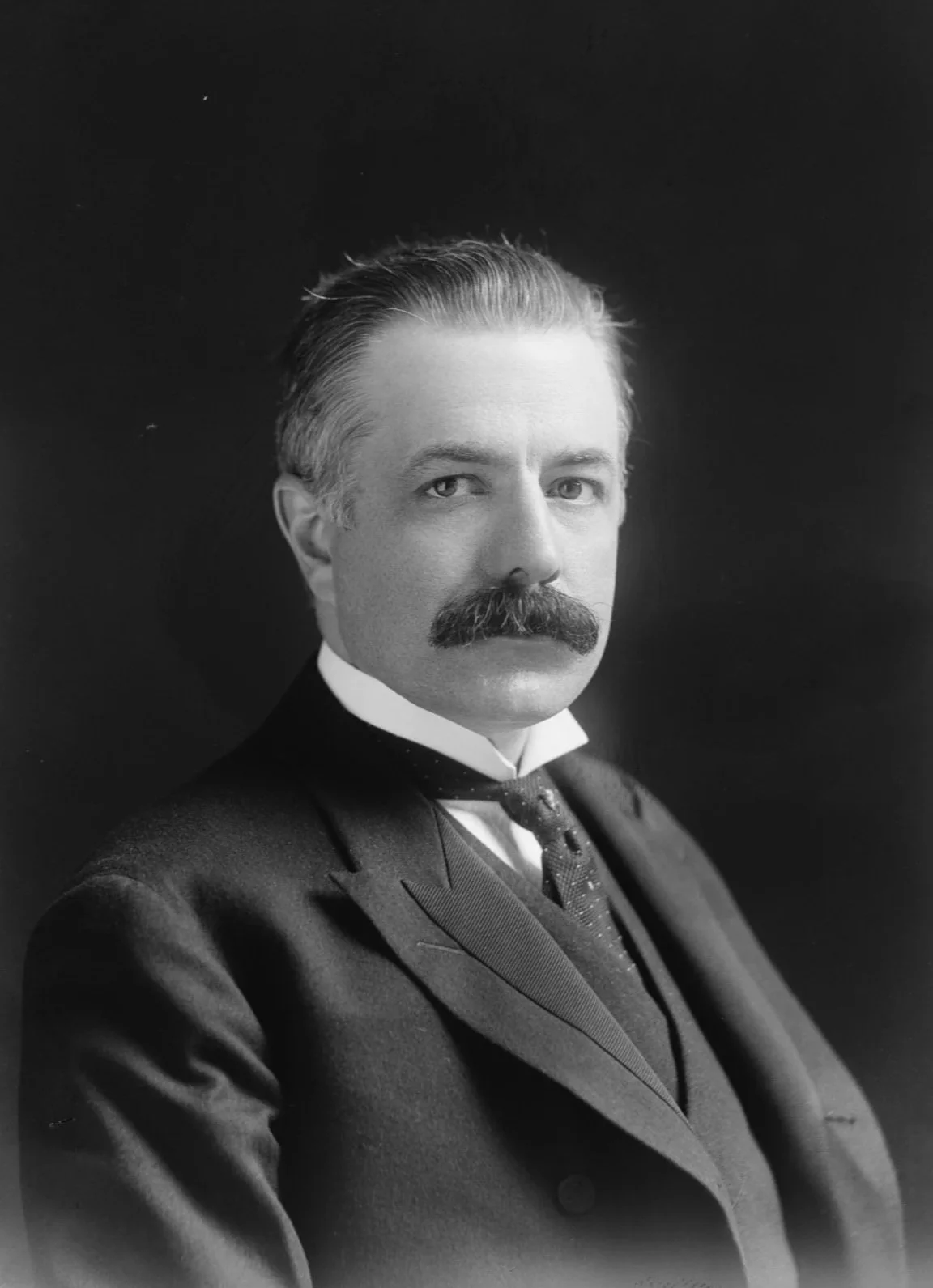
George Bruce Cortelyou, 1898
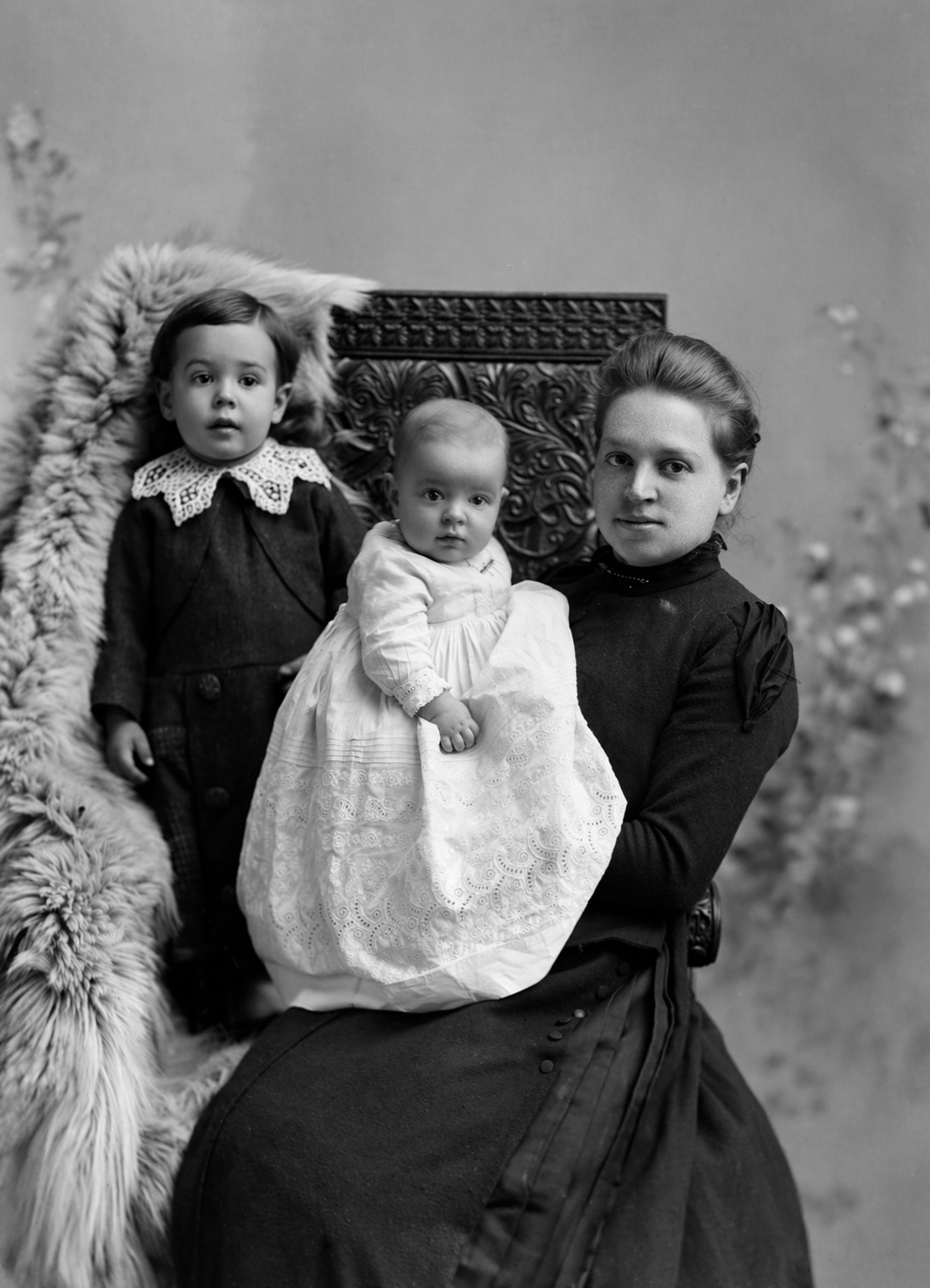
Lillie with George and the younger William, and earlier sitting in 1893
George Bruce Cortelyou belonged to a class of American public servants whose influence was felt more in function than in fame. He did not arrive in Washington with a sweeping ideology or a reputation that preceded him. Instead, he built his career through discipline, attention to detail, and a capacity for organization that proved indispensable at a moment when the federal government was growing in both size and complexity. By the time his name became known beyond administrative circles, he had already shaped the daily workings of the presidency and would go on to hold three cabinet positions, culminating as Secretary of the Treasury during one of the most unstable financial moments of the early twentieth century.
Born on July 26, 1862, in New York City, George B. Cortelyou came of age in a country still recovering from the Civil War. His early life offered little indication of the roles he would later assume. He was educated in public schools and went on to study at what is now George Washington University. His first professional steps were taken not in politics, but in education. He taught shorthand and eventually became a school principal, an experience that required both precision and authority, and one that trained him in managing people and systems, skills that would later define his approach to government service.
His entry into federal service came in 1888, when he joined the Post Office Department. It was a practical beginning in one of the government's largest and most visible institutions. The Post Office, at that time, was a national network that connected communities across vast distances, and its operation required coordination on a scale that few other agencies could match. Cortelyou's work there allowed him to develop a reputation for efficiency and reliability. He was not a man who sought attention, but he was one who delivered results, and in Washington, that combination rarely went unnoticed.
His rise accelerated in 1898, when he was appointed private secretary to President William McKinley. The position, though modest in title, carried immense responsibility. Cortelyou became the gatekeeper to the president, controlling access, organizing correspondence, and managing the flow of information into and out of the executive office. In an era before the formalization of the modern White House staff, the private secretary served as a central figure in the administration's daily operation. Cortelyou's ability to maintain order amid constant demands made him indispensable to McKinley.
His role was tested under extraordinary circumstances in September 1901, during the Assassination of William McKinley. Cortelyou was present during the crisis, managing communications and ensuring continuity in the face of national shock. When McKinley died and the presidency passed to Theodore Roosevelt, Cortelyou's steady presence provided a bridge between administrations. Roosevelt, recognizing his competence, retained him and soon elevated him to cabinet rank.
In 1902, Cortelyou became the first Secretary of the newly established Department of Commerce and Labor. The creation of this department reflected the changing nature of the American economy, which was rapidly industrializing and increasingly complex. Cortelyou's task was to bring structure to this new entity, balancing the interests of business and labor at a time when tensions between the two were often high. His approach was pragmatic rather than ideological. He focused on building systems, establishing procedures, and ensuring that the department could function effectively from the outset.
His tenure there was followed in 1905 by his appointment as Postmaster General, returning him to a department he understood intimately. The Post Office remained a critical institution, and Cortelyou worked to improve its efficiency and accountability. His reforms were not dramatic, but they were effective, aimed at strengthening the infrastructure that connected the nation.
In 1907, he reached the pinnacle of his public career when he was appointed Secretary of the Treasury. It was a difficult moment to assume such responsibility. The nation was in the grip of the Panic of 1907, a crisis that threatened the stability of banks and the broader economy. Without the support of a central banking system, Cortelyou was forced to navigate the situation with limited tools. He worked closely with private financiers, including J.P. Morgan, to stabilize the financial system, authorizing the release of government funds to support struggling institutions and restore public confidence.
His actions during the crisis were measured and deliberate. He understood the importance of maintaining confidence in the financial system, and his decisions reflected a balance between caution and necessity. While the Panic of 1907 exposed weaknesses in the nation's financial structure, it also highlighted the need for reforms that would eventually lead to the creation of the Federal Reserve. Cortelyou's role in managing the crisis placed him among those who helped guide the country through a period of uncertainty.
After leaving public office in 1909, Cortelyou entered the private sector, joining the Consolidated Gas Company of New York. His transition reflected a common path for public officials of his era, moving from government service into corporate leadership. Even in this new role, he maintained the same qualities that had defined his public career, discipline, discretion, and a steady approach to management.
He lived until October 23, 1940, witnessing a nation transformed by industrial growth, global conflict, and economic change. Yet despite the breadth of his public service, Cortelyou remained a figure whose legacy was defined more by function than by fame. He did not seek the spotlight, nor did he leave behind a body of public rhetoric that would define his place in history. Instead, his contributions were embedded in the systems he helped build and the stability he helped maintain.
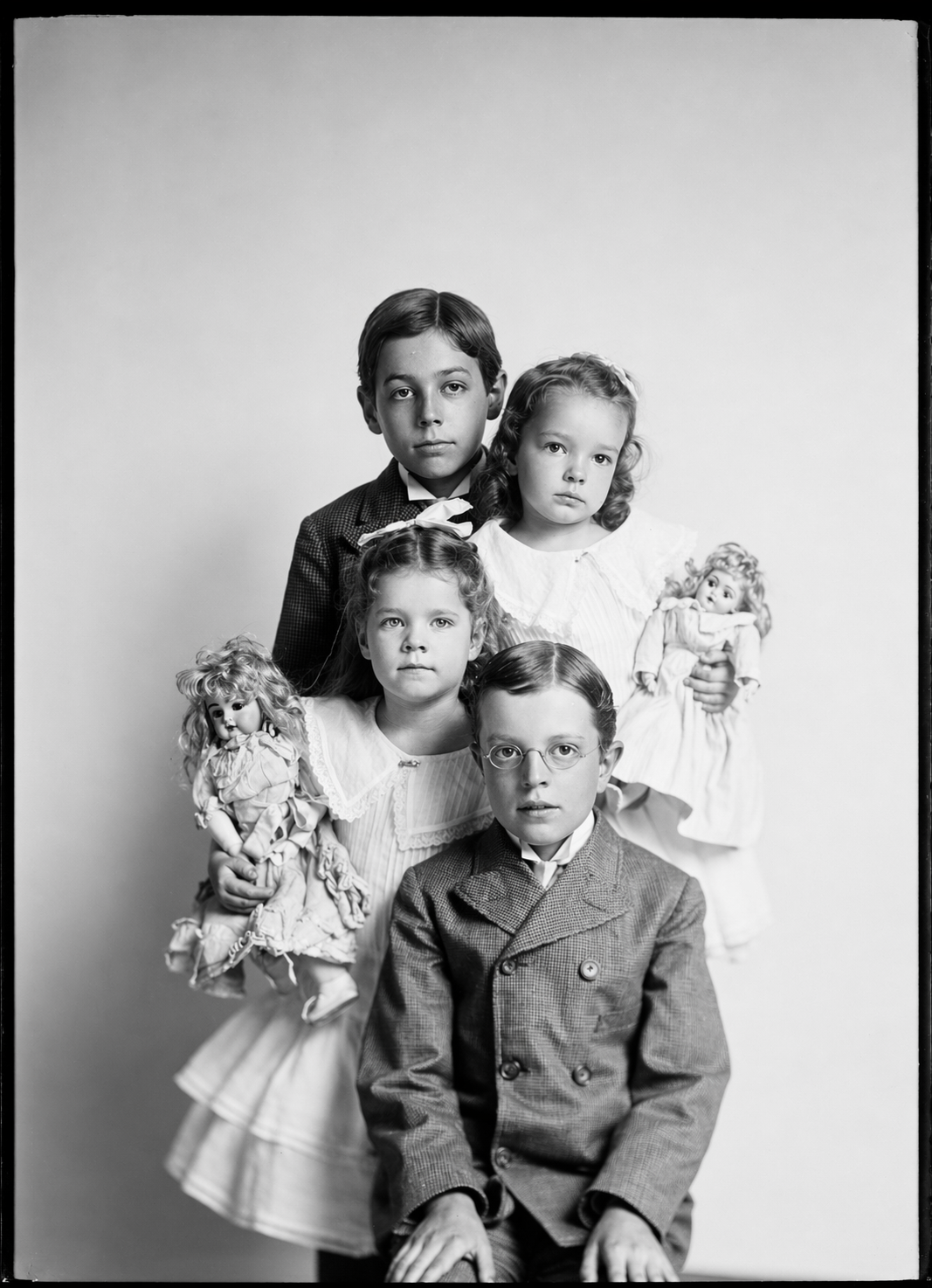
George, Grace, Helen and William (back to front) (1898)
At home, Cortelyou's life followed a quieter course. He and his wife, Lillie Morris Hinds, raised four children, George B. Cortelyou Jr., William W. Cortelyou, Grace Cortelyou, and Helen Cortelyou. Their upbringing took place within the rhythms of Washington life, close to the center of power but removed from its public glare. The household was one of order and expectation, shaped by a father whose professional life demanded discipline and whose personal life reflected the same measured tone.
The children, like many of their generation, did not pursue public office. George B. Cortelyou Jr. entered business and corporate administration, applying the skills of organization and management that had defined his father's career in a different sphere. William W. Cortelyou also followed a professional path, though he remained largely outside the public record, a reflection of a life lived without the visibility that had marked his father's service.
Grace Cortelyou and Helen Cortelyou lived within the social and domestic frameworks typical of their time. Their lives were shaped by family, community, and the expectations placed upon women in the early twentieth century. While their father's name carried weight in political circles, their own lives unfolded in quieter settings, defined less by public achievement and more by personal and social roles.
What becomes clear in tracing the Cortelyou family is a pattern familiar to Washington across generations. One life stands at the center of public attention, while those around it move in and out of its orbit, connected but not defined by it. The children of George B. Cortelyou inherited proximity to power, but not necessarily its ambition or its demands.
In the end, George B. Cortelyou represents a form of leadership that is often overlooked. He was not a politician in the traditional sense, nor was he a public figure driven by personal acclaim. He was, instead, a builder of systems, a manager of complexity, and a steady presence in moments when stability mattered most. His legacy is found not in speeches or monuments, but in the quiet efficiency of institutions that continued to function because of his work.
And in a portrait taken in Washington in the 1890s, before the cabinet titles and national crises, he appears as he often was, composed, measured, and fully in control of the moment, a man whose greatest influence would come not from what he said, but from what he made possible.