Daniel Wolsey Voorhees | The Tall Sycamore of the Wabash
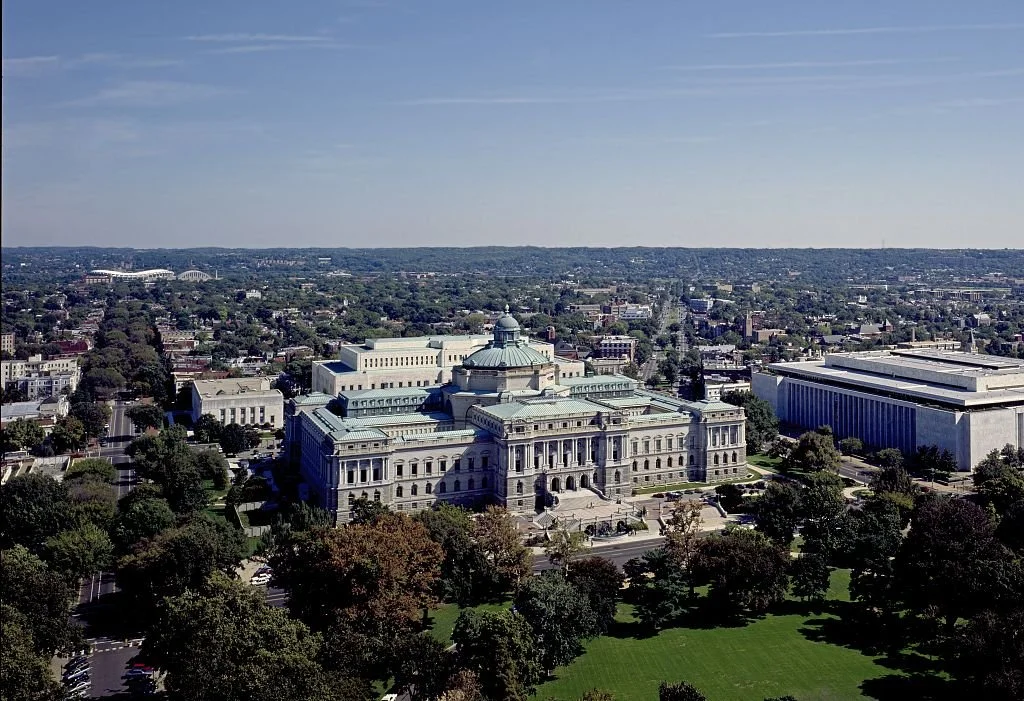
Voorhees became a major congressional advocate for the Library of Congress and served as chairman of the Senate Committee on the Library.
In the Washington portraits of Daniel Wolsey Voorhees, nothing is unique; something almost theatrical marks the man across photos from several studios. The broad forehead, heavy mustache, pointed beard, dark coat, and unwavering expression belong unmistakably to the nineteenth century. Yet the face is not merely picturesque in the C.M. Bell tradition. It belonged to a politician who participated in nearly every great political argument that transformed the United States between Abraham Lincoln's 1860 election and the eve of the twentieth century, as it yawned into the Progressive Era.
When we consider Voorhees, remember he lived through the sectional crisis over slavery expansion, the Civil War, emancipation, Reconstruction, industrialization, the struggle over paper money and silver, and the Gilded Age's increasingly powerful federal government. He bitterly resisted some of those transformations. He accommodated others. Through them all, he remained unmistakably a western Democrat. One might think Jacksonian in his determination to adhere to his principles. To his admirers, he became the "Tall Sycamore of the Wabash," one of his generation's great political orators.
Before he was a man, Daniel Wolsey Voorhees was born on September 26, 1827, in Liberty Township, Butler County, Ohio, just north of Cincinnati. His parents were Stephen Voorhees and Rachel Elliott Voorhees, and the family line traced its proud Dutch ancestry back to the Van Voorhees family. Rachel Elliott brought an Irish-American line into the family. Soon after Daniel's birth, the family moved 200 miles west into Fountain County, Indiana, where Stephen Voorhees had acquired farmland.
During the 1840s, the Old Northwest rapidly transitioned into a commercial agricultural powerhouse as a massive wave of German and Irish immigrants settled its fertile lands. The expansion of railroads and canals during this decade permanently shifted the region's economic alignment away from the South and tightly tied it to Northeastern markets. Furthermore, its foundational identity as a free-labor region intensified sectional tensions, positioning it as a political counterweight against the expansion of Southern slavery.
Daniel therefore grew up in the ever-developing Old Northwest, with its fertile fields rapidly being settled. Indiana had entered the Union only eleven years before his birth. Roads were primitive, settlement was expanding rapidly, and western Indiana's political culture was shaped by farmers, lawyers, courthouse politicians, and the lingering influence of Andrew Jackson. Still, railroads and canals were emerging, binding its economic corridors to Northeastern markets. Voorhees attended local schools near Veedersburg before entering Indiana Asbury University at Greencastle, later renamed DePauw University. He graduated in 1849, amid the California Gold Rush.
Law proved his natural calling. After college, he studied in Crawfordsville and was admitted to the bar in 1851 to practice in Indiana. He opened an office in Covington and quickly established a reputation as an advocate whose greatest weapon was his voice. Accounts of his career repeatedly emphasize the same qualities: physical presence, emotional power, command of a jury, and an extraordinary capacity for political oratory. In 1853, he became a local prosecuting attorney. Three years later Democrats nominated him for Congress, though he narrowly lost by 1% to People’s Party candidate, James Wilson. He subsequently moved to Terre Haute, which became his permanent political and professional base, and in the late 1850s President James Buchanan appointed him United States district attorney for Indiana.
Before the Civil War made him nationally controversial, one case drew unusual attention to Voorhees. In 1859, he defended John E. Cook, one of John Brown's followers captured after the raid on Harpers Ferry. Voorhees was no abolitionist by any stretch of the imagination. His argument sought to distinguish Cook from Brown and from the abolitionist cause rather than defend the raid itself. Cook was ultimately executed, but Voorhees's performance enhanced the young Indiana lawyer's national reputation.
The Civil War Politics
Voorhees entered Congress at one of America's most dangerous moments. After “Bleeding Kansas,” Democrats were split, and Voorhees reentered the political fray as a pro-Lecompton Democrat. Wilson, then a Republican, vacated the seat to volunteer for the Union cause. Still, the seat went to Anti-Lecompton Democrat Voorhees, who adhered to Stephen Douglas’s doctrine of Popular Sovereignty. Elected in 1860, Voorhees took his seat in March 1861. By then, Abraham Lincoln had been inaugurated, southern states were leaving the Union, and Fort Sumter was only weeks away.
Voorhees supported preservation of the Union, yet he became one of the Lincoln administration's most formidable Democratic critics. His political outlook also centered on Douglas and local interests. He attacked the suspension of habeas corpus, military arrests, the draft, wartime financial measures, and eventually emancipation. He viewed many of Lincoln's policies as unconstitutional expansions of federal authority. This was a political world where bitterness in the emerging Republican Party was growing, as criticism shifted among Democratic ranks. Republicans accused antiwar Democrats of undermining soldiers in the field. Democrats charged Lincoln with converting a constitutional republic into something approaching military despotism. Voorhees also became associated with the Peace Democrats, whom their more hostile opponents called Copperheads. The pejorative label has followed him ever since.
He was certainly part of the anti-administration Democratic movement and spoke in the language of states' rights, constitutional restraint, white racial supremacy, and suspicion of centralized power. Yet he was not identical to the most radical Peace Democrat, Clement Vallandigham of Ohio. Contemporary and later accounts generally place Voorhees within the movement while distinguishing him from its extremes.
The Emancipation Proclamation particularly angered him. Voorhees believed that Lincoln had exceeded presidential authority and changed the character of a war supposedly being fought to restore the Union. His criticism reveals the limits of Voorhees's constitutional vision. His conception of liberty did not extend equally across race. He defended constitutional protections vigorously when white political opponents of the administration were involved while resisting the revolutionary consequences of emancipation for African Americans. This contradiction would become even more visible during Reconstruction. Still, Voorhees survived politically. He won reelection during the war and served through February 1866, when Republican Henry Washburn successfully contested his election. He returned to the House in 1869 and remained until 1873.
Reconstruction
If the Civil War established Voorhees as an opponent of Republican wartime policies, Reconstruction hardened his opposition to the Republican vision of the postwar nation. Congressional Republicans sought to remake southern political life, protect formerly enslaved people, impose new constitutional requirements upon the former Confederate states, and guarantee Black citizenship and suffrage. Voorhees rejected much of that project.
He depicted Congressional Reconstruction as an assault upon local self-government and repeatedly portrayed white southerners as victims of federal domination. In a famous 1872 address attacking Republican rule in the South, he accused Congress of destroying legitimate southern governments and manipulating political institutions in order to maintain Republican power. His arguments reflected a broader Democratic effort to end Reconstruction, restore white Democratic political control in the South, and shift national attention away from questions of Black citizenship.
For a modern reader, this is essential to fully understanding Voorhees. His defense of constitutional liberty was real. So was his opposition to equal political power for Black Americans. Like many northern Democrats of his generation, he could condemn federal coercion while accepting a racial hierarchy that left newly freed Americans extraordinarily vulnerable. Indiana itself reflected those tensions. Even after the Civil War, many Hoosiers remained deeply resistant to racial equality. Republican efforts to protect Black political rights became a recurring source of partisan conflict, while Democrats gradually succeeded in shifting the political argument toward corruption, taxation, currency, and economic grievances. Voorhees proved exceptionally well suited to that transition.
The Tall Sycamore
After losing his House seat in 1872, Voorhees returned to law and Indiana politics. His congressional career might have ended there. An opening came when Indiana's powerful Republican senator Oliver P. Morton died in 1877. Voorhees was appointed to fill the vacancy and entered the United States Senate on November 6. The Indiana legislature subsequently elected him to the seat. In the legislative contest for the full term beginning in 1879, Voorhees defeated Benjamin Harrison, the future president, 83 to 60. The Senate would become his political home for the rest of his public career.
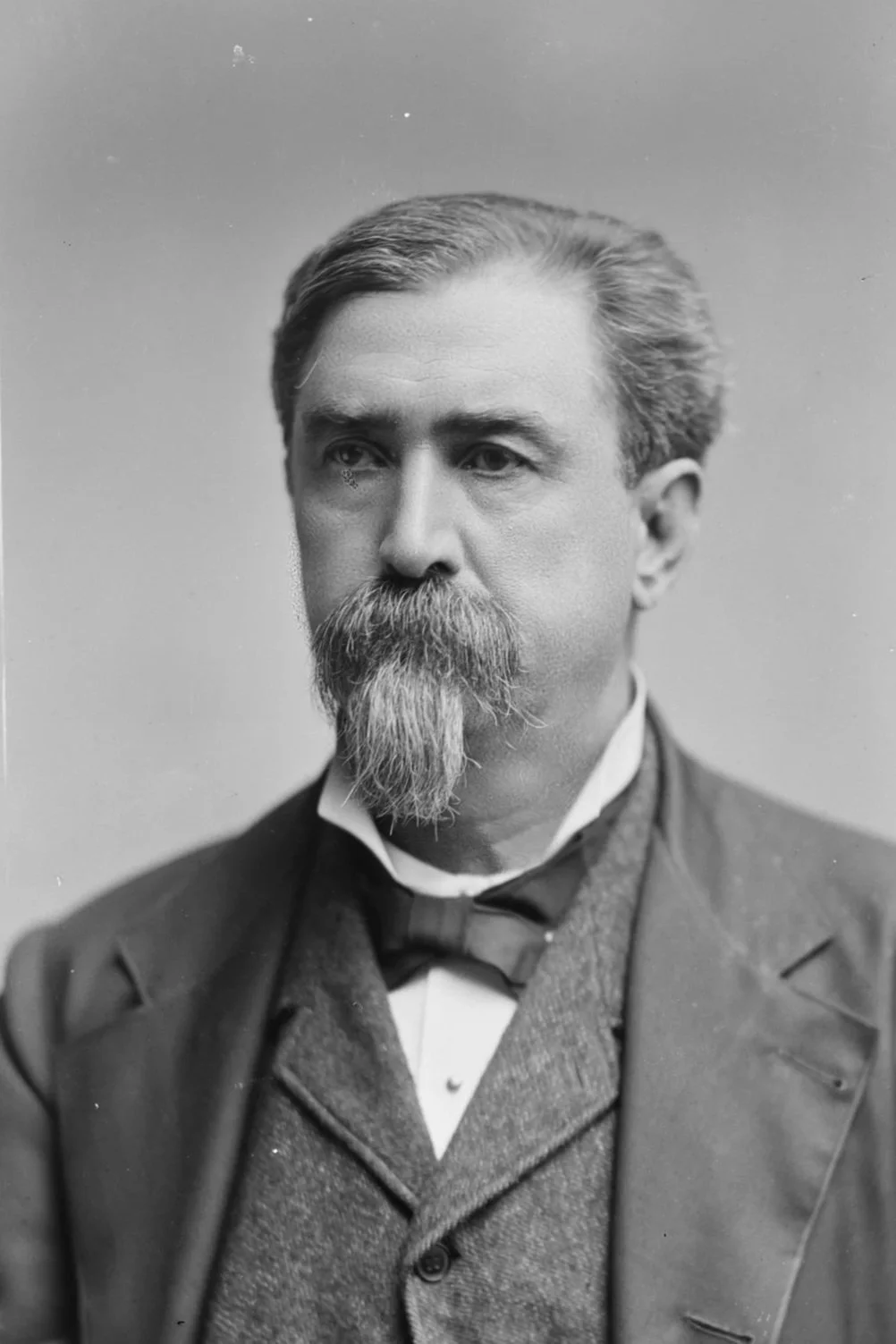
Senator Daniel Voorhees, C.M Bell, c.1880s
By this time his nickname had become inseparable from him: the Tall Sycamore of the Wabash. He stood over six feet tall, was broad-shouldered and imposing, and possessed precisely the physical presence nineteenth-century political audiences admired. Yet the subjects confronting him were changing, and no matter the man's stature, the issues of the day could fell a tree of any size.
The great sectional questions of the Civil War generation gradually gave way to the problems of industrial America: tariffs, banking, railroads, currency, labor, agricultural debt, patronage, and the increasing concentration of economic power. This was the era of free silver and bimetallism, which expanded the money supply and kept silver alongside gold in the nation's monetary system. Voorhees remained a western Democrat, vehemently defending local authority. He distrusted protective tariffs and eastern financial interests and spoke sympathetically for farmers and debtors. These positions anticipated some of the arguments that would later animate the Populists and William Jennings Bryan.
Silver, Cleveland, and the Gilded Age
The great irony of Voorhees's later career arrived in 1893 when Grover Cleveland returned to the presidency just as the United States plunged into the Panic of 1893. Cleveland blamed instability in part upon the Sherman Silver Purchase Act and demanded repeal of the government's silver-purchasing requirement. Voorhees chaired the powerful Senate Finance Committee and remained sympathetic to silver and bimetallism. Politically, however, he belonged to Cleveland's Democratic Party and carried considerable responsibility for moving the administration's legislation through the Senate.
So Voorhees championed the 1893 repeal of the Sherman Silver Purchase Act, despite his lifelong personal support for the "Free Silver" movement and bimetallism. He compromised his monetary principles under intense pressure from President Cleveland, and the repeal coincided with shifting public sentiment in Indiana and the devastating economic fallout of the Panic of 1893. Ultimately, Voorhees prioritized federal patronage and political survival over his ideological beliefs, successfully guiding the unconditional repeal through the Senate to stabilize the nation's gold reserves.
The episode illustrates the difference between the fiery Civil War congressman and the elderly senator. Voorhees still held strong convictions, yet decades in Washington had made him both an institutional politician and an orator. Another cause gave him lasting satisfaction. He became a major congressional advocate for the Library of Congress and chaired the Senate Committee on the Library. For years the national library had occupied inadequate quarters inside the Capitol. Voorhees supported the campaign for a separate building worthy of the growing national collection. The magnificent building, now known as the Thomas Jefferson Building, neared completion during his final years, but he did not live to see it formally open seven months after his death in April of 1897.
Family and the Voorhees Children
Away from politics, Daniel Voorhees married Anna Hardesty, and surviving public records identify four principal children: Harriet Cecelia Voorhees, Charles Stewart Voorhees, James Paxton Voorhees, and Reese H. Voorhees. Each preserved a different piece of the family legacy.
Charles Stewart Voorhees followed his father most directly into politics. Born in 1853, he studied law and eventually moved west to Washington Territory. He became prosecuting attorney of Whitman County and then served two terms as Washington Territory's delegate to Congress from 1885 to 1889. Father and son therefore served in Washington simultaneously, Daniel in the Senate and Charles representing the Pacific Northwest on the eve of Washington statehood.
Charles married Frances "Fanny" Belle Vajen in 1888. Their documented daughter, Anna Belle Voorhees, was born in Spokane on February 4, 1895, providing at least one securely documented grandchild of Daniel Wolsey Voorhees. Reese H. Voorhees also moved west and joined Charles in legal practice in Spokane during the 1890s.
James Paxton Voorhees pursued a strikingly different career. He became an actor, writer, and sculptor. Among his works was a bust of his father commemorating Daniel's support for the Library of Congress. Copies eventually became part of Indiana's public memorial landscape, including the bust displayed at the Indiana Statehouse. Harriet Cecelia Voorhees remained deeply committed to preserving her father's memory. After Daniel's death, his children collected his speeches in Forty Years of Oratory.
Tracing the family beyond these generations becomes more difficult. Publicly accessible historical records identify Daniel and Anna's children and Charles's daughter, Anna Belle. Online genealogical databases contain numerous later individuals bearing the Voorhees name, but the currently accessible documentary evidence is not strong enough to connect specific living people to Daniel Wolsey Voorhees with the certainty appropriate for publication. The responsible present-day conclusion, therefore, is that the family line continued into the twentieth century, while a fully verified chain to living descendants requires work through census records, marriage certificates, obituaries, probate files, and modern vital records rather than surname matching alone.
The Last Years
Voorhees's health deteriorated during the 1890s. He delivered what amounted to a political valedictory in the Senate in January 1896, returning once more to the causes that had defined his later career: silver, opposition to excessive tariff protection, and resistance to concentrated federal power. Indiana's political landscape had also changed. Republicans had strengthened their position, and Voorhees's long hold on his Senate seat ended when his term expired on March 3, 1897. Republican Charles W. Fairbanks succeeded him.
Voorhees contemplated joining the lecture circuit and began a memoir tentatively titled The Public Men of My Times. This was part of the Lyceum movement and the rapidly growing Chautauqua movement, America's premier form of mass education and commercial entertainment. Reminding us that long before radio, television, or the internet, millions of Americans gathered in large tents, town halls, and theaters to hear speakers discuss politics, science, literature, and morality. He apparently hoped that publishing his recollections might also provide financial security for his family but only fragments were completed.
On April 10, 1897, less than five weeks after leaving the Senate, Daniel Wolsey Voorhees died in Washington, D.C. He was sixty-nine years old. His remains were returned to Terre Haute and buried at Highland Lawn Cemetery. The date was an almost poetic coincidence. The new Library of Congress building that Voorhees had championed was nearing completion. On the day he died, materials for the Library's great transfer were already moving toward the new building. Later that year, the Library left its cramped Capitol quarters and opened in the monumental structure Voorhees had worked for years to secure. He never walked through its completed doors.
A Complicated American Life
Daniel Wolsey Voorhees fits uneasily into modern political categories. He defended constitutional restraints but sometimes showed little concern for the political rights of Black Americans, much like Woodrow Wilson, who would emerge from the Democratic ranks a decade later. He opposed Lincoln's wartime expansion of presidential power and emancipation policies, resisted Radical Reconstruction, and became one of the great Democratic voices of nineteenth-century Indiana. He also advocated for indebted farmers, easier money, lower tariffs, congressional institutions, and a national library available to generations he would never see. His life therefore spans much more than a dispute with Abraham Lincoln.
Voorhees began as the son of an Indiana farming family in a republic still shaped by the frontier. He entered Congress as the Union was coming apart. He fought politically through four years of civil war, resisted Reconstruction's transformations, adapted to the economic battles of industrial America, and ended his career as a Gilded Age elder statesman. By the time C. M. Bell photographed him in Washington, Voorhees had become something more than an Indiana politician. The camera preserved the face of a man who had watched the United States change almost beyond recognition. He had opposed some of that change, encouraged some of it, and survived nearly forty years at the center of its political arguments. The name his generation remembers him by remains fitting. Daniel Wolsey Voorhees was the “Tall Sycamore of the Wabash.” And for C.M. Bell, his 25,000 glass negatives now rest in the house that Senator Voorhees built, our Library of Congress.