
Bishop Daniel Alexander Payne, Architect of a Church and a People
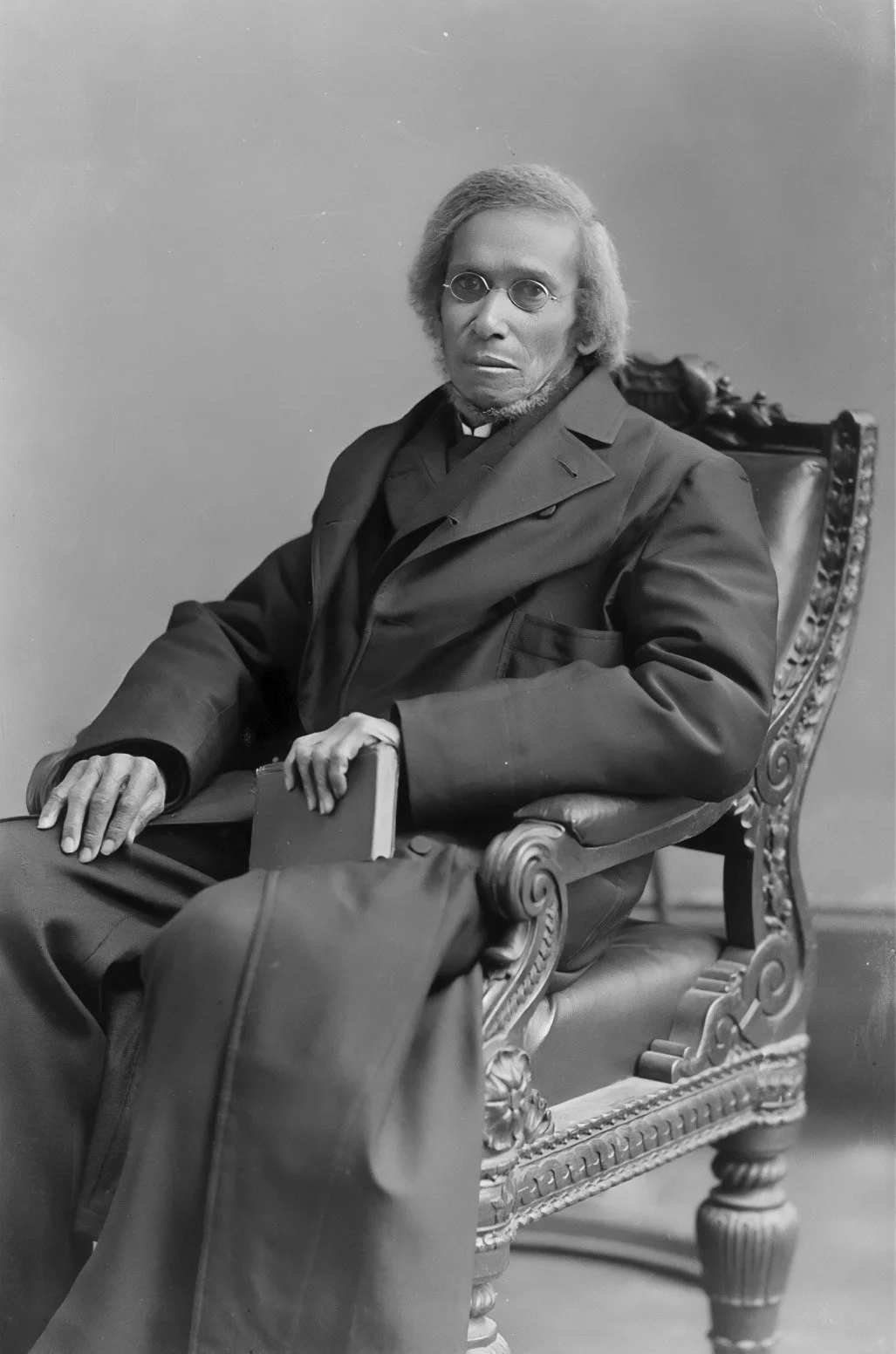
Bishop Payne in the studio of Charles Milton Bell
In the long and often unfinished story of American freedom, few figures stand as firmly at the intersection of faith, education, and disciplined self-determination as Daniel Alexander Payne. His life stretched from the early years of the nineteenth century into the aftermath of the Civil War, and across that span, he helped shape not only a church but a people learning how to live in freedom.
Payne was born in Charleston, South Carolina, in 1811, a free Black man in a city that offered neither comfort nor security to those of his condition. His early life was marked by a hunger for learning. In a world that sought to deny him both education and advancement, he pursued knowledge with intensity, studying languages, theology, and literature largely on his own. That pursuit would become the defining thread of his life. Charleston in the 1830s was not a place where Black education was tolerated. After the Denmark Vesey scare, laws tightened, and Black schools were shuttered. Payne himself opened a school for Black children, only to see it forcibly closed. It was an early lesson in the limits imposed by the slaveholding South, and it set him on a path that would take him northward, into a broader world of possibility.
His eventual affiliation with the African Methodist Episcopal Church proved decisive. Founded by Richard Allen, the AME Church was itself an act of resistance, a declaration that Black Christians would worship under their own authority, free from the indignities imposed by white-controlled congregations. By the time Payne entered its ranks, the church was growing, but it lacked the institutional structure that he believed was necessary for long-term strength. Payne brought something uncommon to the AME Church: a conviction that faith must be accompanied by order, education, and intellectual seriousness. He resisted the idea that emotional expression alone could sustain a people emerging from bondage. For Payne, the future required discipline. It required trained ministers, instructed congregations, and institutions that could endure.
This conviction found its fullest expression in his work at Wilberforce University. Founded in 1856 and later reorganized under AME leadership, Wilberforce became the first college owned and operated by African Americans. Payne served as its president, and under his guidance, it became a center of intellectual and moral formation. At Wilberforce, Payne insisted on standards that rivaled those of established white institutions. He emphasized classical education, theology, and moral discipline. In doing so, he sought to counter the prevailing assumption that Black Americans were incapable of higher learning. The university stood as a quiet but unmistakable rebuttal to that claim.
His leadership extended beyond the classroom. In 1852, Payne was elected bishop, and from that position, he worked tirelessly to expand and organize the AME Church. The Civil War and its aftermath opened new ground. As formerly enslaved people sought community, stability, and meaning, the AME Church spread rapidly across the South. Payne traveled extensively, ordaining ministers, establishing congregations, and insisting that the church not lose itself in the moment. Freedom, he understood, could easily be squandered without structure. He urged newly formed congregations to invest in schools, to educate their children, and to cultivate habits of discipline that would sustain them in a hostile environment.
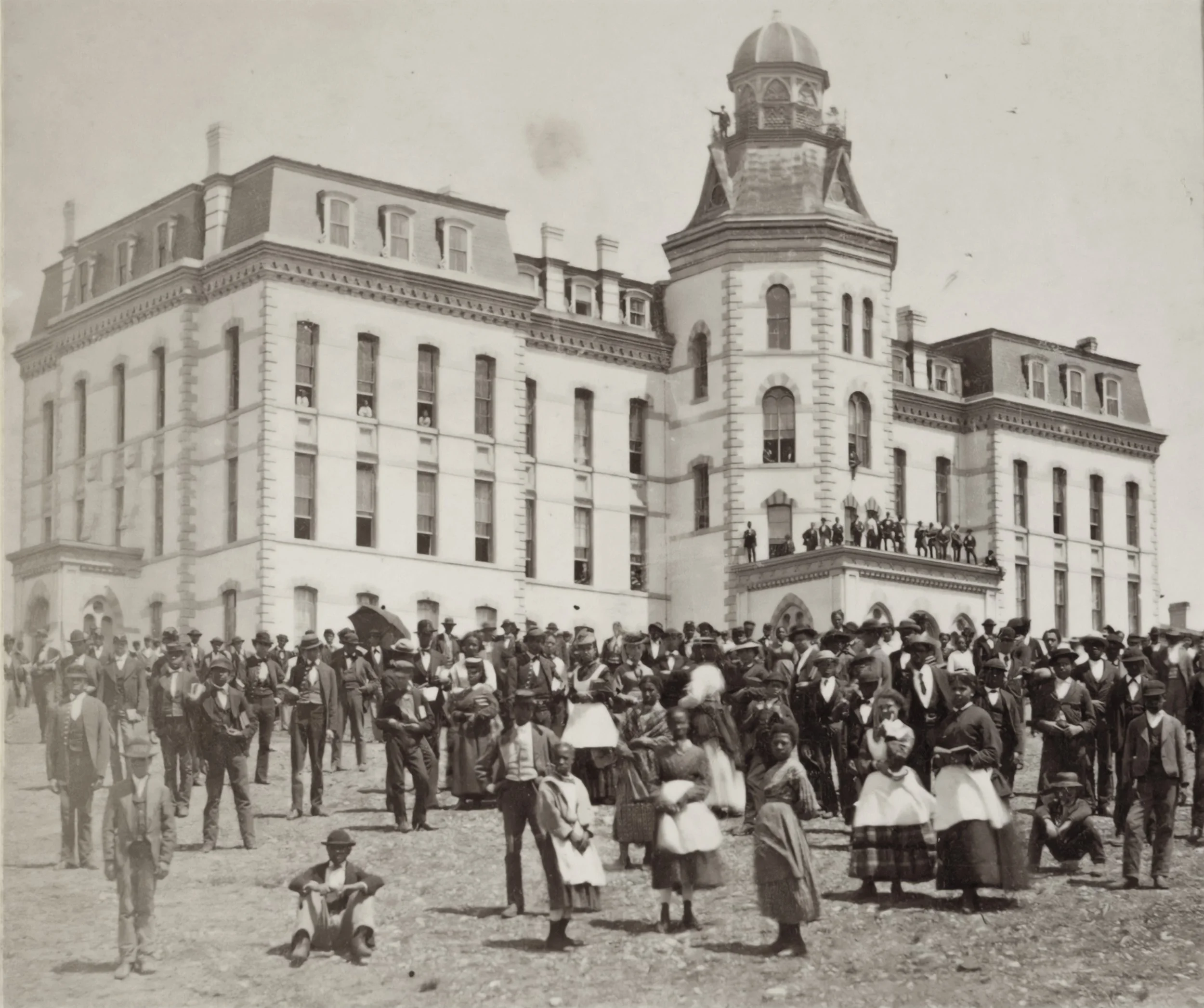
Students and families at Wilberforce University
There was tension in his vision. Payne was sometimes criticized for what others saw as rigidity, even elitism. He placed a high value on decorum and intellectual preparation, and he was wary of forms of worship that he believed lacked order. Yet this tension reflects the larger challenge of the era. How does a people newly freed from bondage build institutions that can endure? How does faith move from survival to formation? Payne's answer was clear. Freedom required more than release from chains. It required the cultivation of the mind, the shaping of character, and the steady construction of institutions capable of carrying a people forward. His work placed him in the company of other great builders of the post-war period, men and women who understood that the struggle for equality would be fought not only in courts and legislatures, but in classrooms, churches, and communities. Payne's contribution was to ensure that the AME Church would stand at the center of that effort.
The photograph of Payne, taken by Charles Milton Bell, captures something of this character. He does not present as a man carried by emotion or swept up in momentary enthusiasm. There is a steadiness in his expression, a sense of resolve that suggests both the weight he carried and the clarity of his purpose. This is not accidental. A deep awareness of responsibility marked Payne's life. He understood that he was part of a generation upon whom much depended. The institutions he helped build would shape the lives of countless others. The standards he set would echo long after his own time. In this sense, Payne's life resonates with the deeper rhythms of the Christian story, particularly as they come into focus during Holy Week. The movement from suffering to resurrection is not immediate. It is marked by endurance, by discipline, by a willingness to carry burdens that do not quickly lift.
Payne lived in that space. He did not see the full fruits of his labor, nor did he expect to. His work was oriented toward a future he would not fully inhabit. Yet he labored with the conviction that such work mattered, that the slow shaping of a people through faith and education was itself a form of participation in a larger redemption. He died in 1893, leaving behind a church stronger, more organized, and more intellectually grounded than the one he had entered. Wilberforce endured. The AME Church continued to grow. And the example he set, of faith joined to discipline, of belief translated into structure, remains instructive. Daniel Alexander Payne does not fit easily into the more familiar narratives of the Gilded Age. He was not a financier, nor a politician in the conventional sense. Yet his influence runs quietly beneath the surface of American life. In the schools he helped establish, in the ministers he trained, in the congregations he shaped, his legacy persists.
He reminds us that the work of building a people is neither quick nor easy. It requires patience, conviction, and a willingness to hold fast when circumstances press hard.
Faith, in his life, was not a matter of comfort. It was a matter of formation.
And that, perhaps, is the most enduring lesson he leaves behind.