
John Austin Keliher: From Boston's Immigrant Streets to the Halls of Congress
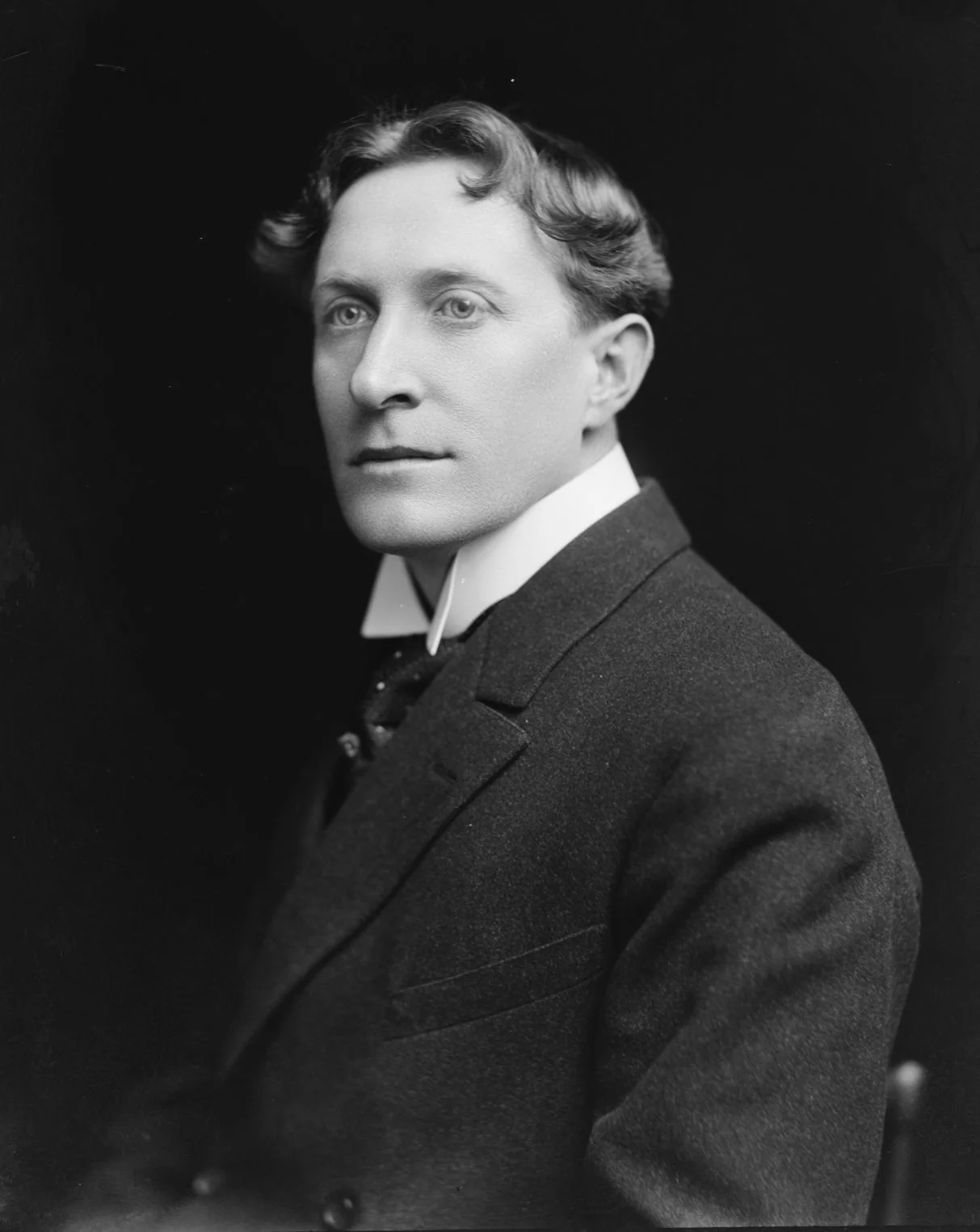
John Austin Keliher, 1896
In the autumn of 1896, a young politician from Massachusetts sat before the camera in the Washington studio of C. M. Bell. The resulting portrait reveals a man of confidence and ambition. His expression is composed, his gaze direct, and his bearing unmistakably that of someone destined for public life. The sitter was John Austin Keliher, known throughout much of his career as "Honorable J. A. Keliher." At the time of the photograph, he was a rising figure in Massachusetts politics. Within a few years, he would become a member of the United States Congress and later one of the most influential local officials in Boston.
Though not among the giants of American political history, Keliher's life illustrates an important chapter in the nation's story. He belonged to a generation of Irish-American leaders who transformed political life in New England during the late nineteenth and early twentieth centuries. His career reflected the growing power of immigrant communities, the expansion of urban political organizations, and the opportunities available to ambitious men in America's rapidly changing cities.
John Austin Keliher was born in Boston, Massachusetts, on December 2, 1866, just a year after the end of the Civil War. The United States was entering a period of extraordinary growth. Railroads connected the continent, factories multiplied, and millions of immigrants arrived on American shores. Boston, Keliher's hometown, stood at the center of many of these changes.
The city was undergoing a dramatic demographic transformation. Large numbers of Irish immigrants had settled there following the Great Famine of the 1840s and 1850s. By the time Keliher was born, Irish-American families were becoming a powerful force in local politics, business, religion, and civic life. The generation before him had struggled for acceptance. His generation would begin to attain positions of real authority.
Keliher received his education in Boston's public schools. Unlike many future politicians of the era who came from wealthy families and prestigious universities, he pursued a path shaped by the opportunities available through public education and political involvement. He entered the workforce while still young and became active in community affairs. The skills that would define his political career, organization, communication, and personal relationships were developed in the neighborhoods and political clubs of Boston rather than in elite academic institutions.
Politics in nineteenth-century Boston was intensely local. Success depended on personal contact, neighborhood loyalty, and organizational discipline. Keliher proved adept at all three. He emerged as a capable and energetic Democratic organizer during a period when the Democratic Party was increasingly identified with urban immigrant communities.
By the early 1890s, he had entered elected office. His rise was swift enough that by 1896, the year of his Bell portrait, he was already known as "The Honorable J. A. Keliher." The title reflected service in the Massachusetts legislature, where he established a reputation as a diligent representative of his constituents. The Massachusetts House of Representatives served as a training ground for many ambitious politicians. Members confronted practical questions involving public infrastructure, education, labor issues, municipal governance, and economic development. These experiences helped prepare Keliher for larger responsibilities.
The 1890s were years of significant political debate. The nation grappled with economic depression, labor unrest, questions of monetary policy, and the challenges of industrialization. Massachusetts, as one of America's leading industrial states, stood at the center of many of these discussions. Legislators like Keliher faced the difficult task of balancing the interests of workers, businesses, immigrants, and established political elites. The portrait taken by Bell's studio captures Keliher at this pivotal moment. He was no longer merely a local activist, yet he had not reached the height of his career. The photograph preserves the image of a man on the threshold of greater prominence.
Keliher continued his political advancement through service in both the Massachusetts House of Representatives and the Massachusetts Senate. His growing influence within Democratic circles positioned him for a larger stage. At the turn of the twentieth century, Boston politics was becoming increasingly competitive. Irish-American leaders were assuming positions once dominated by older Protestant elites. Keliher represented this new generation. He possessed political skills, organizational talent, and an understanding of the concerns facing urban voters.
In 1902, he achieved a major milestone by being elected to the United States House of Representatives. His victory reflected both his personal popularity and the increasing strength of Democratic organizations in Massachusetts. When Keliher arrived in Washington in 1903, the nation was entering the Progressive Era. Industrial expansion had created unprecedented wealth but also profound social challenges. Reformers sought solutions to corruption, unsafe working conditions, urban poverty, and political inefficiency. Congress became a battleground where competing visions of America's future were debated.
Representing Massachusetts in the House of Representatives, Keliher served four consecutive terms from 1903 until 1911. During these years he witnessed the administrations of Theodore Roosevelt and William Howard Taft, the expansion of American influence overseas, and significant domestic reform efforts. Although Keliher was not among the most nationally prominent members of Congress, he fulfilled an important role as a representative of his district and constituents. Much of congressional work occurs outside headlines. Members assist citizens, advocate for local interests, participate in committee work, and contribute to legislative deliberations. Keliher's years in Congress reflected this practical side of public service.
His service coincided with a period of growing federal responsibility. The national government became increasingly involved in economic regulation, transportation, labor issues, and public welfare. Members of Congress faced questions that would shape the modern American state. For Keliher, congressional service also represented a remarkable personal achievement. The son of Boston's Irish-American community had reached one of the highest levels of public office in the nation. His career embodied the social mobility and political advancement that immigrant families increasingly achieved during the era.
After leaving Congress in 1911, Keliher did not retire from public life. Instead, he returned to Massachusetts and embarked on another significant chapter of public service. He became Sheriff of Suffolk County, a position that carried substantial administrative responsibilities. Suffolk County included Boston, making the office one of considerable importance. Sheriffs supervised correctional facilities, managed court-related duties, and maintained aspects of local law enforcement administration.
The position required political skill as well as executive competence. Keliher possessed both. His long experience in politics, combined with his understanding of Boston's neighborhoods and institutions, made him well-suited for the role. As sheriff, he served during a period of profound change. Boston continued to grow and diversify. New immigrant groups arrived. Technological innovations transformed daily life. The First World War altered national priorities, and the social upheavals of the 1920s introduced new challenges. Keliher remained a respected figure in Massachusetts public life throughout these decades. He belonged to a generation of political leaders who bridged two eras: the nineteenth-century world of local political organizations and the emerging twentieth-century era of modern government administration.
His longevity in public service reflected not only political ability but also personal resilience. Electoral success can be fleeting, yet Keliher maintained public trust across many years and different offices. Beyond politics, Keliher's life reflected the broader story of Irish-American advancement. During his lifetime, Irish-Americans moved from the margins of American society toward positions of influence and leadership. Their success reshaped the political landscape of cities like Boston. Men such as Keliher helped demonstrate that public office was open to talent and determination regardless of ethnic background. Their achievements contributed to the gradual integration of immigrant communities into the American political mainstream.
The Bell portrait from 1896 gains additional significance when viewed through this lens. It records not merely an individual politician but a representative figure in a larger American story. Looking at the photograph today, one sees a young public servant whose career embodied the aspirations of countless immigrant families seeking opportunity in the United States. As the years passed, Keliher witnessed extraordinary changes. He lived through the Spanish-American War, the Progressive Era, the First World War, the Roaring Twenties, and the onset of the Great Depression. The nation that existed at his birth in 1866 differed dramatically from the America he knew in old age.
By the late 1930s his active political career was behind him, but his contributions remained part of Massachusetts history. He had served in state government, represented his constituents in Congress, and administered one of the most important county offices in New England. John Austin Keliher died on November 22, 1938, just days before his seventy-second birthday. His death marked the passing of a generation that had guided America from the post-Civil War era into the modern age.
Obituaries remembered him as a longtime public servant whose career spanned local, state, and national government. He left behind a record of dedication to public office and civic responsibility. Though history often focuses on presidents, generals, and famous reformers, democratic government depends equally upon officials such as Keliher, individuals who devote decades to representing citizens, managing institutions, and sustaining public life.
Today, Keliher is remembered primarily by historians, political researchers, and archivists. Yet photographs such as the one preserved from the Bell Studio ensure that his story remains accessible. Through that portrait, viewers encounter a young politician whose future was still unfolding. They see not the seasoned congressman or veteran sheriff, but the ambitious public servant standing at the beginning of his rise.
The image serves as a reminder of photography's unique power. Documents record dates and offices. Newspapers preserve speeches and election results. Photographs preserve presence. In Bell's portrait, Keliher appears not as a distant historical figure but as a living individual, confident, determined, and full of possibility. More than a century later, that image remains one of the most compelling surviving connections to his life. It allows us to look directly into the face of a man who participated in the shaping of modern Boston and who represented Massachusetts during a formative period in American history. Through public service at the local, state, and national levels, John Austin Keliher left a legacy worthy of remembrance, and Bell's camera ensured that future generations would not forget the man behind the title, "The Honorable J. A. Keliher."