The United States Soldiers' Home: A Refuge for Veterans, a Sanctuary for Lincoln, and a Living Piece of American History
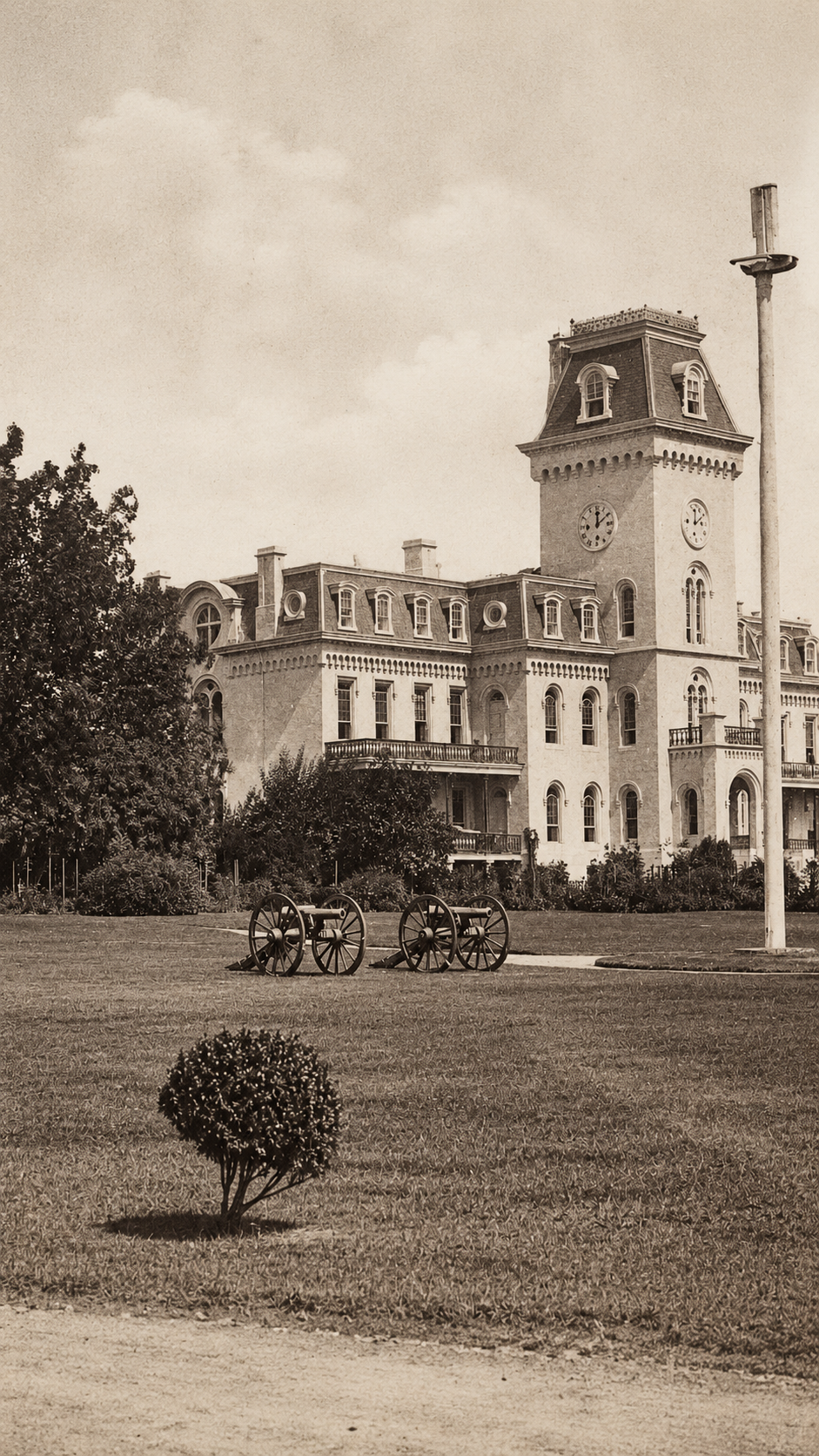
Soldiers’ Home, 1867
On a rise north of Washington City, above the dust, noise, and politics of the nation's capital, stands one of the most remarkable institutions in American history. Known today as the Armed Forces Retirement Home, and home to the preserved cottage where Abraham Lincoln spent much of the Civil War, the United States Soldiers' Home has served the nation for more than 175 years. Its story is one of war and peace, sacrifice and recovery, memory and renewal. It is the story of America's soldiers and the country's evolving obligation to care for those who served.
The Soldiers' Home was born from an idea that seems obvious today but was revolutionary in the early nineteenth century. For much of American history, veterans received little formal support from the federal government. Disabled soldiers often depended upon family, local charities, or state programs. The federal government maintained pensions for some veterans, but there existed no national retirement community for enlisted men.
The Mexican-American War changed that. Following the conflict of 1846 to 1848, the United States acquired vast territories in the West and emerged as a continental power. The war also generated substantial revenue through captured Mexican customs duties. Army leaders proposed using a portion of these funds to establish a permanent home for aging and disabled enlisted soldiers. Congress approved the idea in 1851. The institution was formally named the United States Military Asylum, though soldiers quickly referred to it simply as the Soldiers' Home. The project represented one of the first major federal commitments to veteran care in American history.
The government selected a rural site of more than 250 acres on high ground north of the city. At the time, Washington was still a relatively small place. Beyond the White House and Capitol lay farms, woodlands, and country estates. The chosen site offered fresh air, open space, and commanding views across the capital.
Construction began in the early 1850s as the main building, completed in stages, reflected fashionable European influences, particularly the French Second Empire style that would become popular throughout the United States after the Civil War. Its broad wings, mansard roofs, and distinctive clock tower gave the institution an appearance both elegant and imposing.
Officials envisioned not merely a residence but a community. Veterans could walk among gardens, cultivate crops, care for livestock, and enjoy the restorative effects of nature. The philosophy reflected nineteenth-century beliefs that fresh air, productive labor, and beautiful surroundings promoted both physical and moral health. Long before the creation of the Veterans Administration, the Soldiers' Home represented a pioneering experiment in national veteran care.
In 1861, everything changed. When Confederate forces fired upon Fort Sumter, the nation plunged into civil war. Washington suddenly transformed from a sleepy capital into the nerve center of a vast military effort. Thousands of soldiers flooded into the city. Hospitals appeared in churches, schools, public buildings, and temporary barracks. Wounded men arrived from battlefields stretching from Virginia to Tennessee.
Its residents included veterans from earlier conflicts, but now it also became a symbol of what awaited those who survived the war. Its spacious grounds offered respite amid a city overwhelmed by military activity. The conflict would soon bring the institution its most famous resident.
Today the Soldiers' Home is known throughout the world because of its association with Abraham Lincoln. Beginning in the summer of 1862, Lincoln and his family sought relief from Washington's oppressive heat. The White House was uncomfortable during the summer months, and concerns about disease were ever present. Located several miles from downtown Washington and elevated above the city, the grounds were cooler, quieter, and healthier. A cottage on the property became the Lincoln family's summer residence.
Between 1862 and 1864, Lincoln spent nearly one quarter of his presidency there. Each day he traveled between the White House and the Soldiers' Home, often on horseback. Witnesses remembered seeing the president riding through Washington's outskirts, frequently alone, deep in thought. The setting profoundly affected him.
Here he found moments of peace amid the chaos of war. Here he could escape the endless stream of politicians, generals, and visitors that filled the White House. Most importantly, historians believe Lincoln refined and developed portions of the Emancipation Proclamation while residing at the Soldiers' Home. The grounds became not merely a refuge but a place of presidential reflection. When visitors walk the property today, they are standing where Lincoln wrestled with decisions that would reshape the nation.
The Civil War ended in 1865, but its impact lingered everywhere. Veterans returned home carrying wounds both visible and invisible. The nation faced the challenge of reconciliation and reconstruction. Its population grew as former Union soldiers aged. Men who had fought at Antietam, Gettysburg, Wilderness, and Petersburg found themselves residents of the institution.
Visitors encountered not abstract history but living participants in the conflict. Veterans gathered on porches, strolled the lawns, and shared stories of campaigns that had preserved the Union. It was during this period that the Bell family photographic firm documented the property. In 1867, Bell & Brother participated in a federal effort to photograph important landmarks of Washington. Their image of the Soldiers' Home captured more than architecture. It preserved a landscape still shaped by the memory of war and Lincoln's presence.
As the nineteenth century progressed, Washington expanded dramatically. Streetcars connected distant neighborhoods. Government departments multiplied. New monuments appeared across the capital.
The Soldiers’ Home’s residents enjoyed a degree of independence unusual for the era. The institution maintained farms, workshops, recreational activities, and social events. Veterans lived within a supportive community built around shared experiences.
The Home's association with Lincoln became increasingly important as his memory assumed a sacred place in American culture. Yet the institution never became merely a museum. It remained an active home for retired soldiers, fulfilling the mission envisioned by its founders.
The twentieth century brought new challenges. Veterans of the Spanish-American War joined residents from the Civil War. They were followed by soldiers who served in World War I and later World War II. Civil War veterans spoke of Gettysburg. Spanish-American War veterans remembered Cuba. Doughboys recalled the trenches of France. World War II veterans brought stories from Normandy, North Africa, and the Pacific.
As American military service expanded, so too did the institution's role. Additional facilities were constructed, medical care improved, and resident services evolved to meet changing needs. The Home remained one of the nation's most visible symbols of respect for military service.
By the late twentieth century, historians increasingly recognized the national significance of the Soldiers' Home campus. Lincoln scholars focused attention on the cottage where the president had lived. Researchers studied the property, restored historic structures, and worked to interpret the site's significance for new generations. In 2008, Lincoln's Cottage opened to the public as a major historic attraction. Unlike many presidential sites, the cottage offers an intimate perspective on Lincoln's life.

A stereograph was the virtual reality of the nineteenth century. By viewing two nearly identical photographs through a stereoscope, Americans could experience a remarkable illusion of depth, bringing distant places and historic landmarks to life from their own parlors. Bell & Brother produced stereographic views of Washington, D.C., allowing viewers to explore the nation's capital in three dimensions decades before motion pictures were invented
Visitors encounter not a grand executive mansion but a modest residence where a weary president sought solitude during the nation's darkest crisis. Today the institution survives as the Armed Forces Retirement Home. Its mission remains remarkably similar to that envisioned in 1851: providing care, community, and dignity for veterans. The campus continues to serve retired members of the armed forces while preserving some of the most significant historic landscapes in the nation. Modern Washington now surrounds the property. Highways, neighborhoods, and government buildings have replaced the farms and fields that once stretched beyond its borders.
Yet stepping through the gates still feels like entering another world. The broad lawns remain. Historic buildings still rise above the trees. The quiet atmosphere that once attracted Lincoln endures. The Soldiers' Home stands as both a living institution and a historic monument.
Few places in Washington embody the American experience so completely. The Soldiers' Home reflects the nation's growing commitment to those who served in uniform. It preserves the memory of the Civil War and Abraham Lincoln. It tells the story of generations of veterans who returned from battle seeking rest, companionship, and dignity. Presidents have walked its paths. Veterans of every major American conflict have called it home. Historians have studied it. Photographers such as the Bell family have preserved it.
Most importantly, it remains what it was intended to be from the beginning: a refuge. For more than a century and a half, on a hill above the capital, the Soldiers' Home has reminded Americans that service carries obligations extending beyond the battlefield. It is a place where soldiers healed, where Lincoln reflected, and where the nation learned that caring for its veterans is among its highest responsibilities.